Dolly
By Brian Eggert |
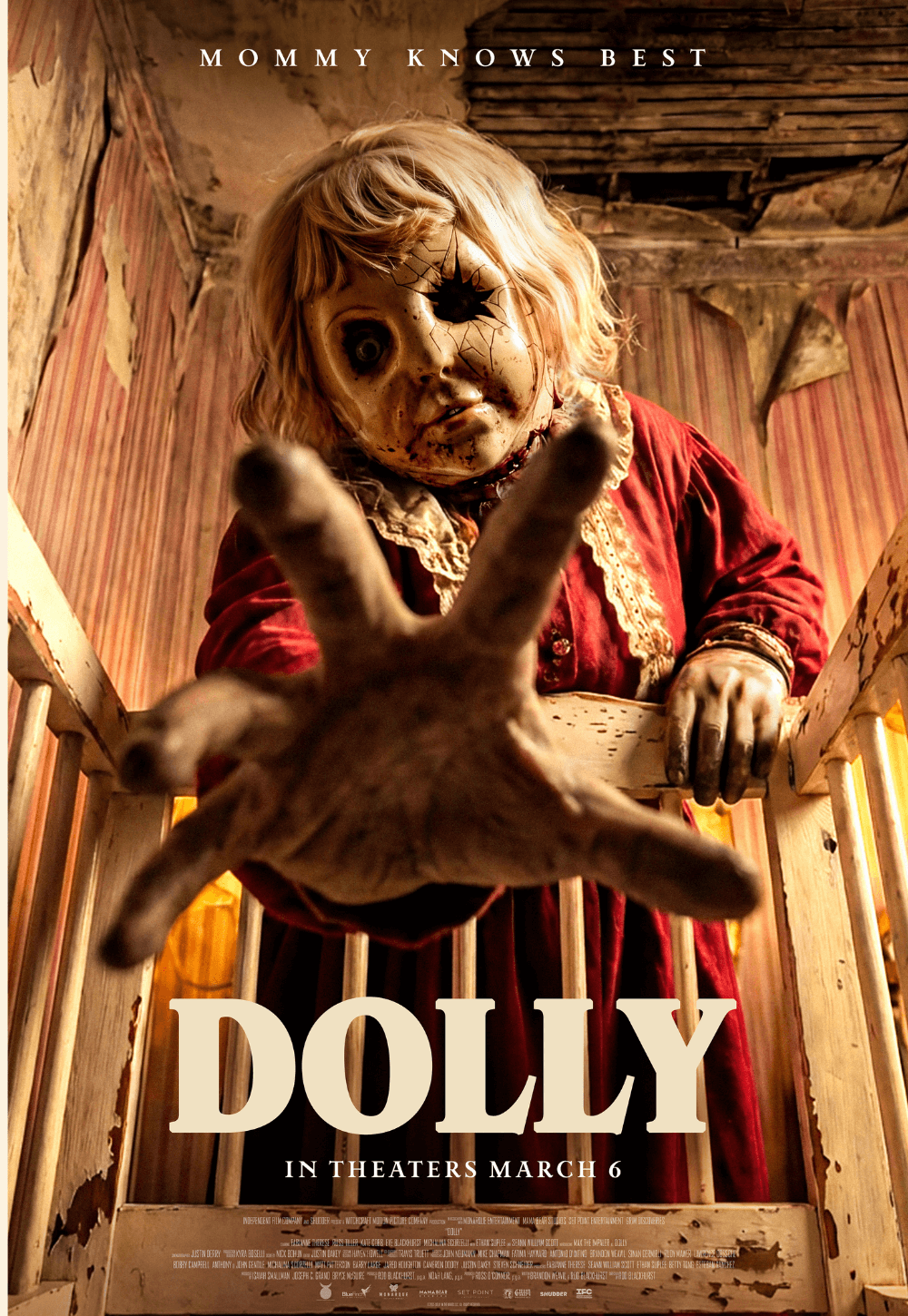
The filmmakers behind Dolly should have called their movie The Tennessee Dollface Massacre. It would have been a more honest acknowledgement of their influences. Not that director Rod Blackhurst disguises his inspiration. Early in the Shudder release, two hikers pass a sign for “Hooper Mine,” as if Blackhurst worried audiences would somehow miss the other allusions to Tobe Hooper’s The Texas Chain Saw Massacre (1974) and decided to spell it out. The movie follows several unfortunates as they encounter a towering woman who wears a porcelain doll mask, kills almost anyone who crosses her path, and treats a kidnapped woman like a member of her messed-up family. Dolly uses a shovel and other random objects, not a chainsaw. But otherwise, the similarities between Blackhurst’s creation and Hooper’s remain too many to ignore.
The director, who co-wrote the script with Brandon Weavil, went to great lengths to approximate the unhinged look and feel of Hooper’s classic. Thanks to Justin Derry’s 16mm cinematography, the filmmaking has that grainy, chaotic vibe seen in Hooper’s work, apart from the occasional CGI effects that soften the edge of the otherwise gut-wrenching practical effects. Dolly is just the latest independent horror movie that, much like 2024’s In a Violent Nature, employs artistic choices to conjure nostalgia for the slashers of yesteryear. Except Blackhurst offers few novel or even innovative ideas, relying instead on tired clichés and a meticulously convoluted story structure to evoke a sense of import. When an 82-minute feature unfolds in a half-dozen chapters, one begins to wonder whether Dolly was meant for a short-form streaming service such as the now-defunct Quibi.
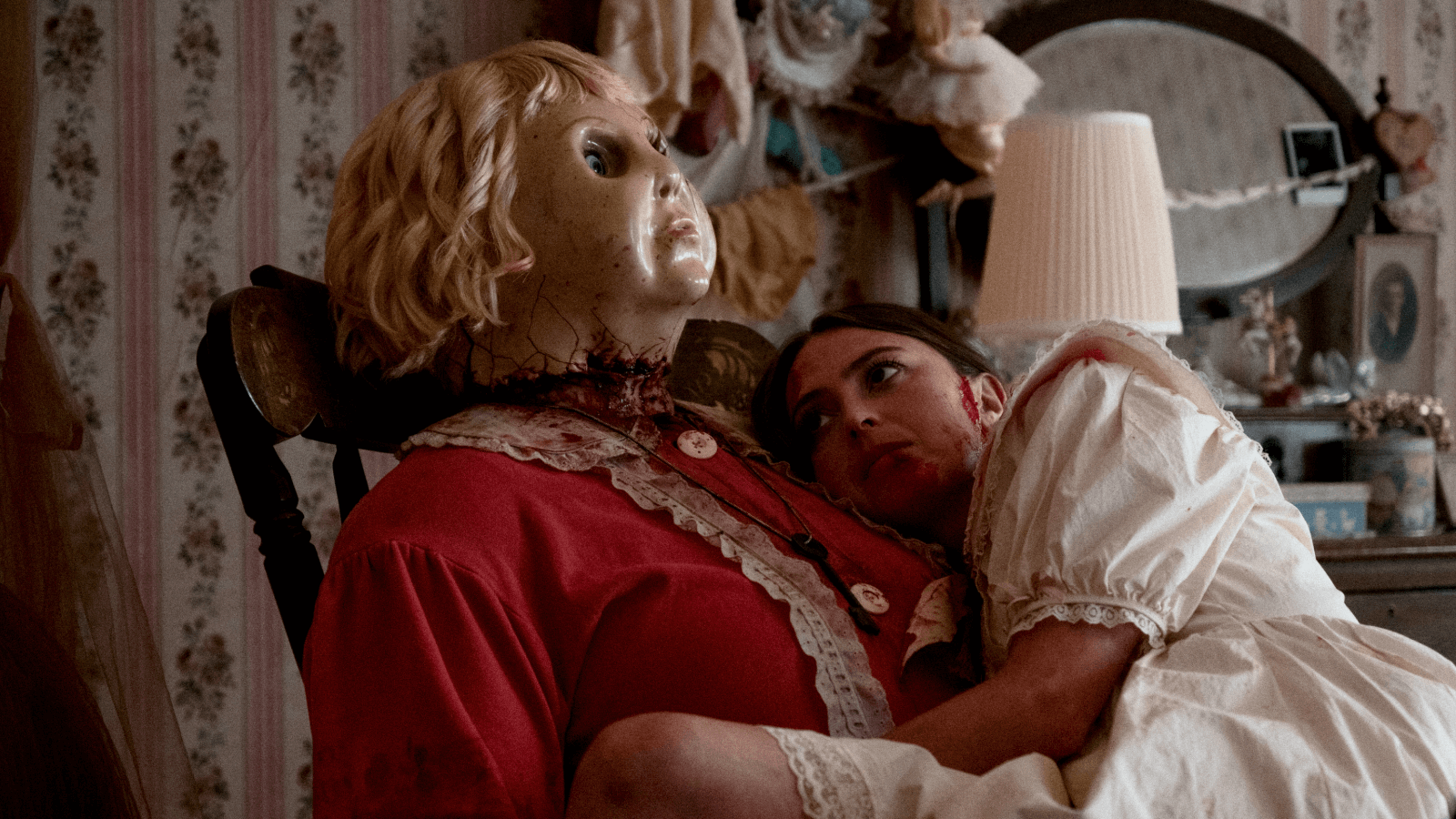
The story centers on Macy (Fabianne Therese), who’s on a Tennessee woodland hiking trip with her boyfriend, Chase (Seann William Scott), a single father who plans to propose. Scott’s name is the biggest in the cast, except perhaps for wrestling champ Max the Impaler, who plays Dolly. The towering killer first appears in a dilapidated house in the forest, cradling a headless corpse, surrounded by flies, and wearing a mask with one missing eye. Not long into the proceedings, Dolly makes short work of Chase, splitting open his face with a shovel. Behaving like a cross between Leatherface and Baby Huey, Dolly is disturbingly strong and imposing, evidenced when she nabs Macy, whom she proceeds to treat like her child.
Not only does Macy wake up in a crib, but she must also endure Dolly seating her in a highchair, placing a pacifier in her mouth, and spanking her with a paddle when she misbehaves. The grotesque domestic nightmare continues when Dolly force-feeds Macy a disgusting-looking stew and a bottle of spoiled milk. When that doesn’t work, Dolly attempts to breastfeed her. The torture continues in this way until Macy can escape, leading to a revelation that Blackhurst draws from Friday the 13th Part 2 (1981). Later, a buffed-up Ethan Suplee appears as Dolly’s deranged father, who calls her “Babygirl”—a callback to Blackhurst’s 2022 proof-of-concept short film, Babygirl (no relation to the 2024 erotic drama of the same name, starring Nicole Kidman).
By the finale, reminiscent of Marilyn Burns’ unhinged screaming in the iconic final scenes of The Texas Chain Saw Massacre, it’s evident that Blackhurst’s pilfering has nothing so memorable in store. The director offers a single touch of inspiration with a brief sequence of Macy surrounded by psychedelic colors, suggesting he had wilder ideas for the movie, but he denied those impulses for a safer presentation rooted in a tribute to Hooper. Worst of all, given its underdeveloped characters, Dolly never convinces us to care about anyone onscreen. Sure, Dolly is imposing. And as Rob Zombie’s output has demonstrated time after time, replicating Hooper’s aesthetic takes skill. But none of this was enough to sustain my interest, not even for less than 90 minutes.
Thank You for Supporting Independent Film Criticism
If the work on DFR has added something meaningful to your love of movies, please consider supporting it.
Here are a few ways to show your support: make a one-time donation, join DFR’s Patreon for access to exclusive writing, or show your support in other ways.
Your contribution helps keep this site running independently. However you choose to support the site, please know that it’s appreciated.
Thank you for reading, and for making this work possible.
Brian Eggert | Critic, Founder
Deep Focus Review