The Definitives
Stalker (1979)
Essay by Brian Eggert |
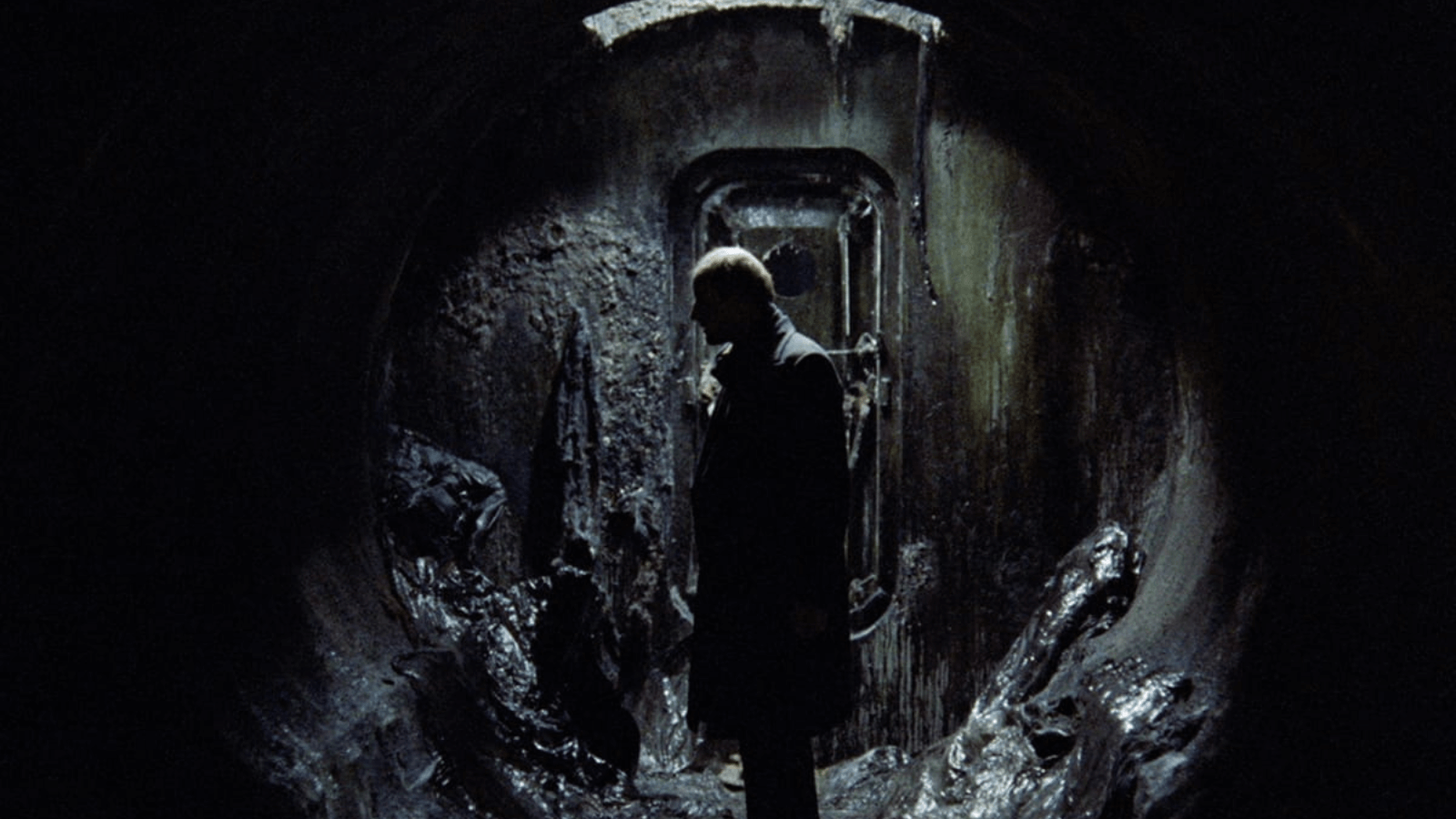
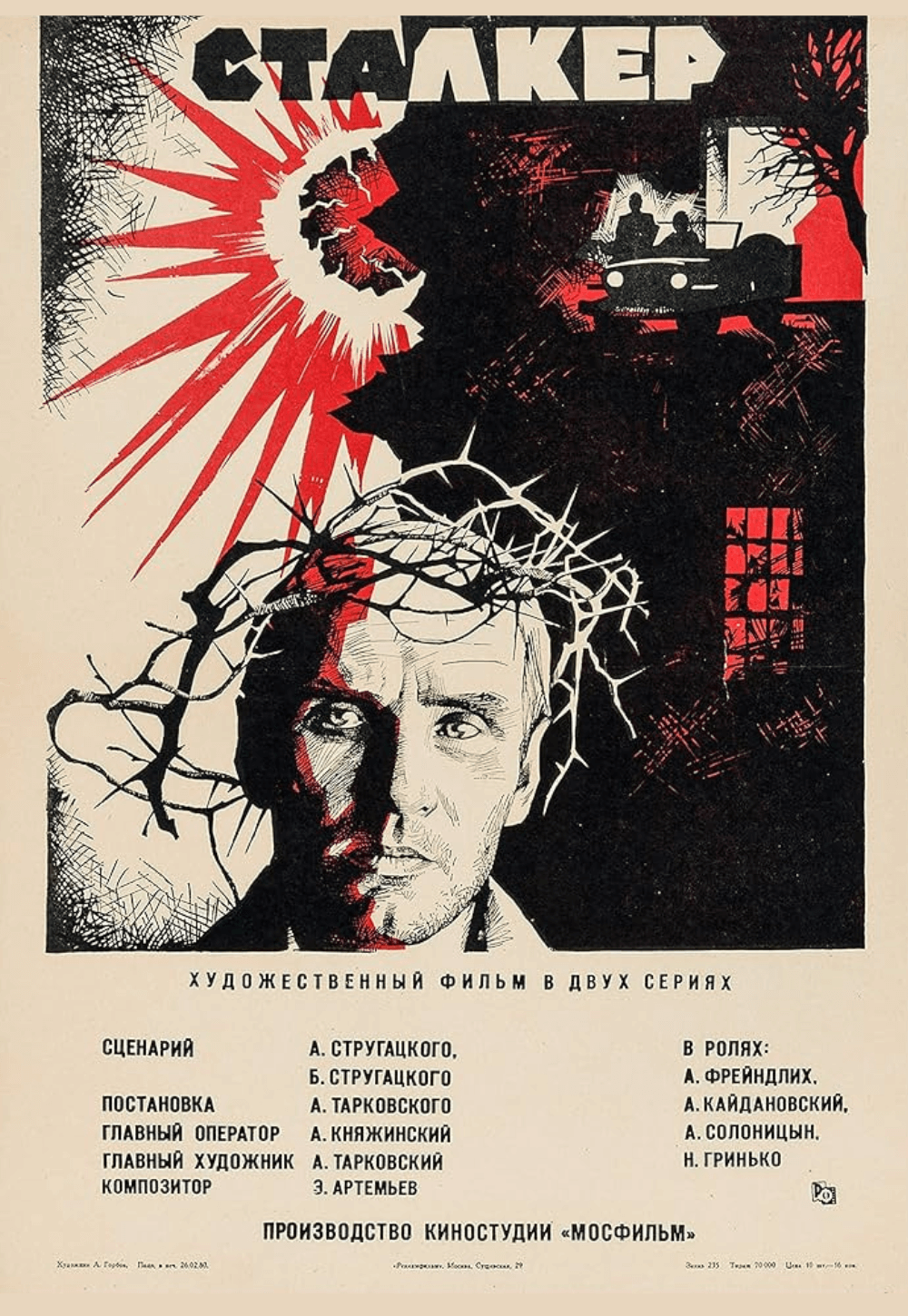
An uncanny cinematic landscape to explore, investigate, and reflect upon, Stalker is an immersive and unwavering search for meaning in terms of what appears onscreen and how audiences have responded since its release in 1979. Andrei Tarkovsky’s metaphysical epic unfolds in a post-apocalyptic setting that serves as an enduring allegory for the power of belief. Despite the ruined earth setting, this is not a commercial genre film populated by the usual shattered-world tropes of authoritarian rule, tribalism, retrofuturist technology, and desperate battles over resources. Although it contains some familiar aspects of the genre, the great Russian filmmaker repurposes them in a spiritual search for external and existential answers. Whether viewed as a metaphor for religious faith, a meditation on the mystery of consciousness, or a testament to the power of artistic creation, Stalker has continued to transfix and fascinate viewers and influence creatives. The director’s second foray into science fiction, after 1972’s brilliant Solaris, once again draws upon popular source material as a springboard for something more defiantly original, indefinable, and specific to Tarkovsky’s worldview and concerns as an artist.
Stalker would be Tarkovsky’s fifth and final feature produced in the Soviet Union before he settled in Europe for the remainder of his life. Not long after leaving Russia, Tarkovsky died in 1986, having only completed two more features in a career cut short by cancer: Nostalghia (1983), made in Italy, and The Sacrifice (1986), made in Sweden. He and others involved in Stalker’s production died of ailments thought to be caused by the unsafe location shoot. Tarkovsky filmed in polluted waters and amid the skeletal remains of broken-down industrial structures, with little regard for the health and safety of the cast and crew. That extratextual detail and its dramatic production history often emerge in assessments of Stalker’s legacy, imbuing the film with a mythic, almost fatalistic quality. However, its influence extends to similarly themed literature, cinema, and video games, from Jeff VanderMeer’s Southern Reach series, where the laws of time and space have been distorted by alien forces, to the visual grammar of post-apocalyptic fiction, as seen in the video game and television series The Last of Us.
Tarkovsky based his screenplay on the 1972 book Roadside Picnic by the Strugatsky brothers, Arkady and Boris. Hugely popular in Soviet and post-Soviet Russia, the Strugatskys first earned acclaim for their books Hard to Be a God (1964) and Monday Begins on Saturday (1965). However, they remain best known for Roadside Picnic, a grounded, fairy tale-esque narrative set many years after a mysterious alien landing. The extraterrestrial visitors left objects at their landing sites. In one such place, known as the Zone, scavengers called “stalkers” make unauthorized trips to collect and sell alien artifacts for study and resale on the lucrative black market. The story follows one stalker on a mission to locate a rumored Golden Ball, an alien contraption that can grant any wish, but only if one of those seeking it out is sacrificed along the way. The question remains: Why would aliens create such a device and leave it for humans to discover? The Strugatskys’ refusal to answer such questions defies the traditional goals of science fiction, which often uses futuristic plot devices to answer life’s mysteries. Instead, their text is more allegorical. And it’s the story’s overwhelming sense of the unknown that attracted Tarkovsky to the material.
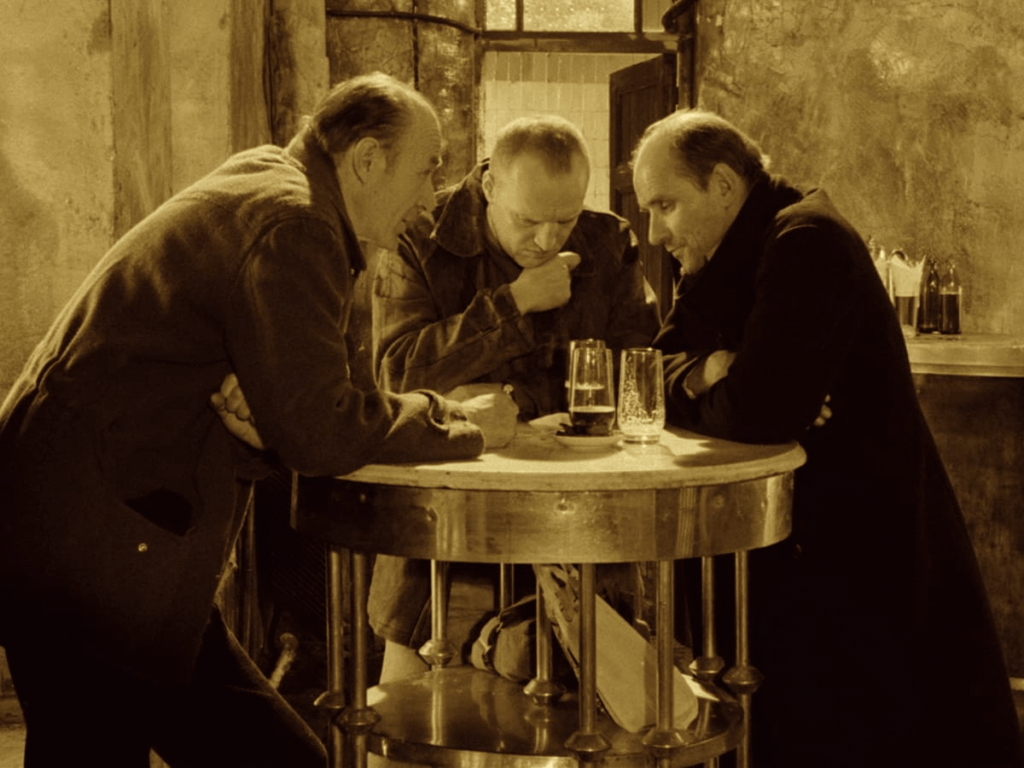
Adapting Roadside Picnic into Stalker, Tarkovsky maintained little fidelity to the source material. By comparison, the director hewed much closer to Stanislaw Lem’s novel Solaris in his earlier book-to-film adaptation—at least initially—than he did to the Strugatskys’ book. The brothers wrote the initial screenplay based on their novel, renaming the material The Machine of Desire. Tarkovsky ultimately demanded an alternate version and collaborated with the brothers on his vision for the film, jettisoning many of the text’s elements. The book’s protagonist, survivor and realist Red Schuchart, becomes the unnamed Stalker in the film, played by Aleksandr Kaidanovsky. A pure and saintly guide who selflessly leads two others, a writer (Anatoly Solonitsyn) and a professor (Nikolai Grinko), into the Zone, the Stalker navigates terrain that doesn’t so much resemble an alien-influenced landscape but an industrial wasteland—to the extent that Tarkovsky allows for the possibility that the Zone’s dangers and wonders lie entirely in the imagination. They do not seek a Golden Ball—a wish-granting machine described in the book. Instead, they search for the Room, which is unremarkable, far from extraterrestrial in appearance, and will supposedly grant wishes. Yet, Tarkovsky never clarifies whether the Room can or will fulfill the visitor’s desires.
Instead, the Stalker warns his traveling companions that the Room does not merely grant wishes but rather their most innate desire, unconscious or otherwise. Recounting what might be a true story or a legend told among Stalkers, he tells of another stalker, nicknamed Porcupine, who was responsible for his brother’s death. Porcupine sought out the Room to ask for his brother’s life back. However, when Porcupine returned from the Zone, he found the Room had granted him great wealth—his truest desire, not his brother’s life, which he wanted to believe was most important. A week later, Porcupine hanged himself in shame. Tarkovsky argued that Stalker’s central theme is “how a man suffers if he has no self-respect.” When finally faced with the possibility of entering the Room, the Stalker’s clients do not trust that their conscious desires align with their unconscious desires. They have been corrupted by their lack of faith and cynicism about the world, but they also acknowledge their faults, so they resolve not to cross the threshold into the Room, fearing what it may reveal about themselves.
Tarkovsky also compresses the narrative timeline from several years in the source material to a single day in the film. The story restructuring allows him to focus more on its themes than on the characters, who, in his retelling, become representative figures without names. They are known as Stalker, Professor, and Writer. The only name that carries over from the book is Monkey, the nickname for the Stalker’s daughter (Natasha Abramova), who cannot walk and displays some telekinetic abilities in the final scene. The Stalker’s wife (Alisa Freindlikh) remains unnamed. The Professor and Writer have hired the Stalker to take them into the Zone to locate the Room, each for different reasons, leading to a journey with protracted travel scenes. This grants a meditative quality that some have dubbed “slow” or transcendental cinema—placing Tarkovsky in the same stylistic camp as Robert Bresson and Yasujiro Ozu. Though, its contemplative mood makes the lack of action oddly engaging in its long silences or passages where nothing seems to be happening, filled by Eduard Artemyev’s haunting score of guitar pangs and synth sounds.
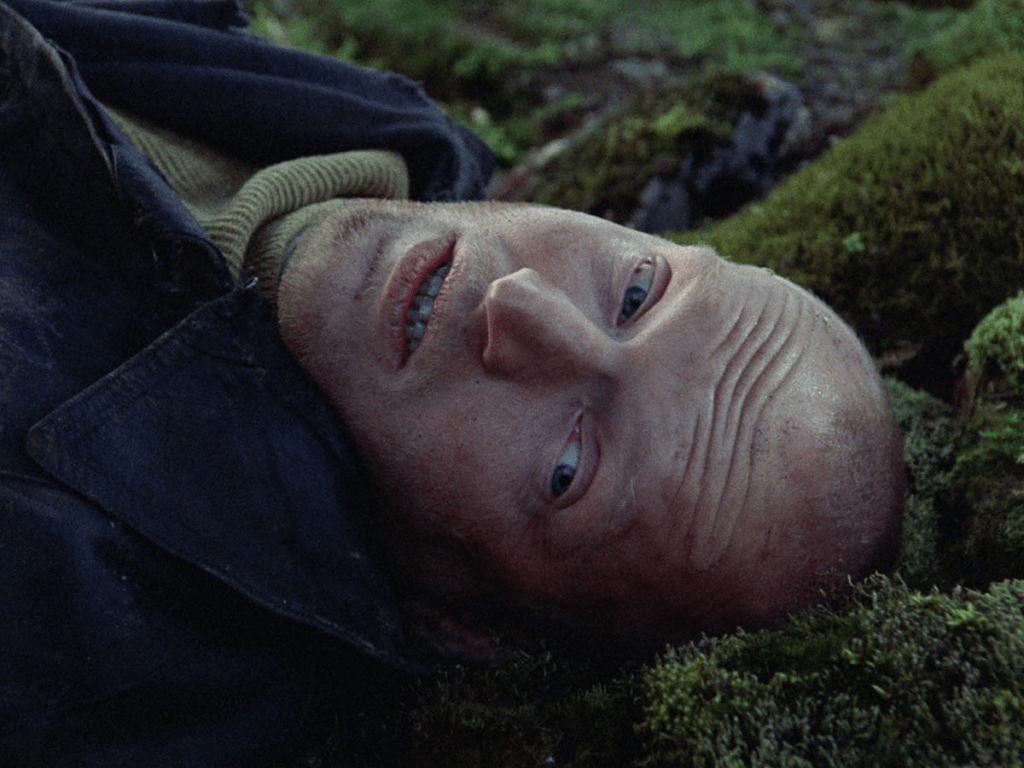
More than just disguising the ideas he wanted to explore in a shroud of science fiction, Tarkovsky faced serious production challenges while making Stalker, resulting in the film’s infamous production history. The shoot began in South Central Asia, but an earthquake soon made the region untenable. Tarkovsky then moved the production to an abandoned Soviet power station, several industrial hubs just outside Tallinn, Estonia, and another active power station in Moscow. While shooting, Tarkovsky and his cinematographer, Georgy Rerberg, clashed after completing a third of the film, only for the footage to be deemed unusable due to a development error with the experimental Kodak film stock. Whether the footage was indeed ruined remains a matter of conjecture. Rerberg believed Tarkovsky manufactured the problem, claiming the director lied because he needed additional time to rethink the screenplay—a notion reinforced by the survival of some of Rerberg’s footage. Regardless, production took a long hiatus until Tarkovsky convinced the state-owned Mosfilm to extend his shooting schedule long enough to complete the project. Taking over art direction duties from Alexander Boim and hiring a new cinematographer (Leonid Kalashnikov at first, then finally Alexander Knyazhinsky), Tarkovsky reshot the film from the beginning. However, the shooting experience had grim consequences for many involved. Tarkovsky, his wife Larissa, Solonitsyn, and others died of cancers attributed to long hours standing in contaminated, oily waters from nearby chemical and paper factories, under conditions about as deadly as the Zone.
Much like the film’s production, the mission is propelled, almost fanatically, by the Stalker, a Holy Fool worthy of a character from Dostoyevsky or one of Werner Herzog’s many misguided and obsessed protagonists. Tarkovsky’s version of the Stalker is not the cynical adventurer of the book but a zealot whose belief in the Zone and the Room drives his trepidation and concern on their journey. He warns they must proceed forward, not back, because “Nobody goes back the way they came.” However, at one point deep in the Zone, the Professor goes back for his rucksack and reappears unharmed. Has the Stalker overestimated the Zone’s danger? After all, many of its fantastical elements never appear to his clients or the film’s viewers. Tarkovsky shows us faint, uncanny signs of mysterious forces, perhaps only through the Stalker’s eyes: someone stops the Writer from veering from the Stalker’s path, though it’s neither the Professor nor the Writer; a curious hawk soars and abruptly disappears in a haunting underground space; the Stalker hears his daughter’s voice reading from the Book of Revelation. Once they arrive at the Room’s threshold, the Stalker vows, “My happiness, my freedom, my dignity, they’re all here.”
Similar to how he deployed science fiction to explore something more profound in Solaris (memory and time as cinematic illusions, among other interpretations), Tarkovsky transforms Roadside Picnic adaptation into an allegory. An allegory for what? That has been the ongoing debate about the film. Scholars and critics have posited that Tarkovsky sought to dramatize aspects of the world around him: the mystery of religious faith, as confirmed by Tarkovsky; a critique of a world in which intellect alone leaves no room for the divine; and the duality of human beings between their sense of self and their actual self. Tarkovsky was an unabashed Russian Orthodox filmmaker who often weighed questions of faith and salvation in his films, putting him at odds with the Soviet Union’s censorship policies that supported state atheism and suppressed religious expression. The Soviet government enforced legislation against religious freedom, prohibiting religious education in state institutions and censoring religious symbolism in cinema. For instance, Tarkovsky’s film Andrei Rublev (1966), about the medieval painter of Christian icons, was cut by 25 minutes to eliminate some religious imagery. But Tarkovsky could conceal his intended themes by incorporating his religious commentary into science-fiction symbolism.
Formally, Tarkovsky deploys a style meant to immerse the viewer in the moment. Unlike earlier and subsequent films by the director, where time passes between shots, Tarkovsky wrote in his book Sculpting in Time that he “wanted there to be no time lapse between the shots” in Stalker. This reinforces why he compressed the narrative’s timeline from several years to a single day and removed much of the book’s story, especially the earlier chapters. He sought to impart feelings of uncertainty and belief to his audience, using techniques that convey the journey and its metaphysical overtones. Tarkovsky’s extended shots of the three travelers on a motorized trolley car approaching the Zone on a long journey steep the viewer in their perspectives, emphasizing the length and anticipation of their mission. Gradually, Artemyev’s music transitions in this sequence from sounding like natural instruments to something electronic, dissonant, and alien, while the sound of the trolley car on the train tracks presents a consistent, hypnotic rhythm underneath. Tarkovsky’s patience and his demands on the audience’s patience amount to an aesthetic austerity meant to challenge his viewers—to test what they are willing to endure before arriving at their cinematic destination.
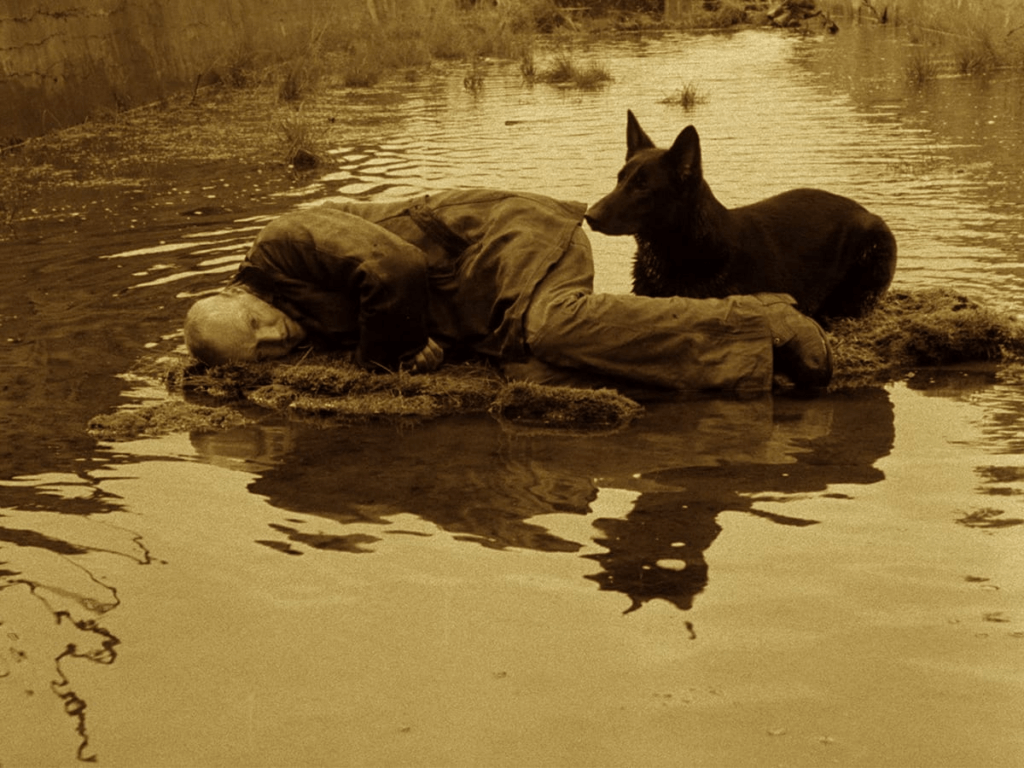
Tarkovsky’s challenge to the viewer is a mere fraction of what the characters endure, including being pursued by armed guards outside the Zone and by mysterious forces inside. The Stalker avoids them by some measure of instinct, combined with a tactic designed to alert him to potential danger: he throws a metal nut tied to a strip of cloth. The practice, detailed in the book, is designed to expose any signs of residual alien gravity or other potential dangers. Tarkovsky’s film offers no such explanation. Similarly, he does not announce when his characters have entered the Zone. However, the switch to color from the amber monochrome footage outside the Zone—where the world is stark and lifeless, and people have limited options—signals their arrival. Inside the Zone, where faith means endless possibilities, the image comes alive with full color. Even the later scenes involving Monkey appear in full color, despite being set outside the Zone. Given that she’s a kind of mutant whose supernatural abilities—using her mind, she moves objects on a table—derive from the Zone, scenes from her perspective require color.
Though their environment changes around them, Tarkovsky’s characters only experience the wonders of the Zone as much as their faith allows. Each of them has a distinct reason for seeking out the Room, and their purpose becomes part of Tarkovsky’s polemical message that creative endeavors and science serve only the faithless. “I dig for the truth,” says the Writer. “But when I do, something happens to it.” The Writer searches for clarity of purpose more than inspiration from the Room, admitting, “A man writes because he is tormented, unsure of himself.” The Scientist, having failed to understand the Zone or the Room, seeks to detonate a bomb against the unknown forces within. The Stalker warns them both that their “most cherished desire” will come true inside the Room, but they “must believe.” Neither believes nor feels sure of themselves, so neither enters the Room, exposing their lack of faith in the Room and themselves. The Stalker’s faith remains untested, but his belief is unshakable. Tarkovsky suggests that the Stalker’s faith is warranted by several shots from the perspective of an unknown force. In several scenes, including one shot from within the Room, the camera observes the characters from the vantage point of another party—not the Stalker, Professor, or Writer, but another presence that looks upon them with curiosity. Is this God or an alien revenant?
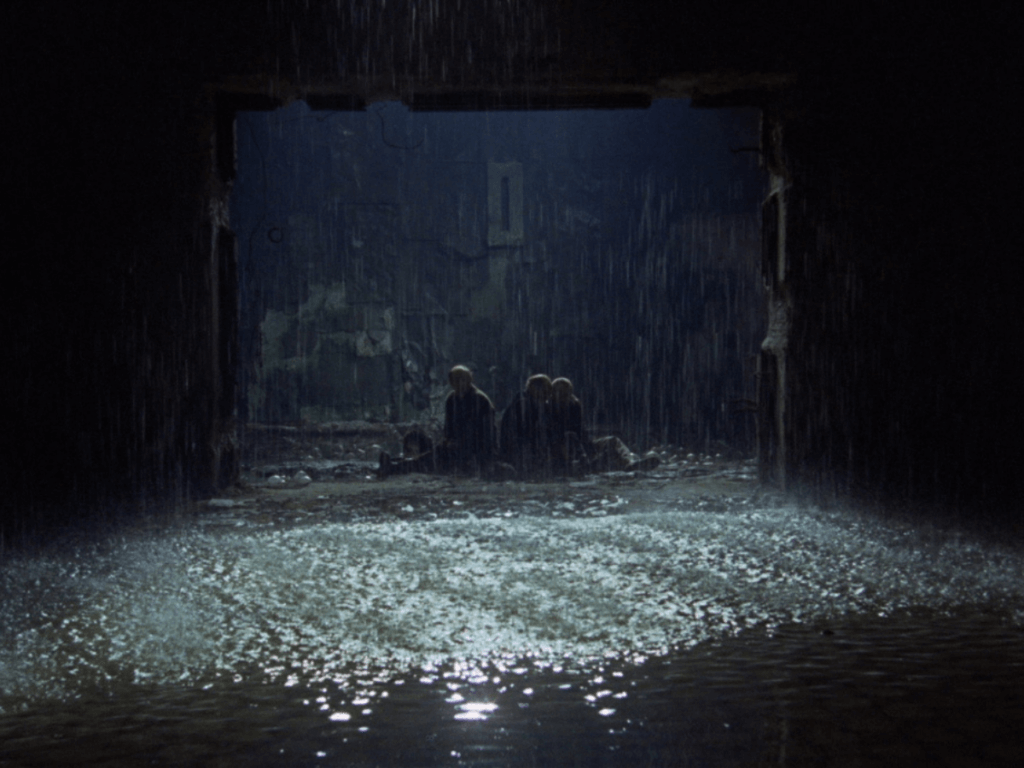
In a sense, Tarkovsky tells his audience not to overanalyze faith; it must be felt, which is how Stalker is best experienced. If the Room symbolizes faith, its possibilities exist only by avoiding the space. Entering the Room allows for the possibility that nothing happens inside, that the wishes and desires of whoever enters will not be fulfilled, and that there is no alien magic (though alien life is hardly mentioned in the film). Not only does the Room pose a perilous task for anyone who may enter, but it may also yield nothing, which would be detrimental to any hope or belief in miracles or the divine. The Professor and Writer represent the unbelievers, the intellectuals rooted in science and personal creativity, who value cold, hard facts and artistic impulses over faith. A similar notion materializes when the Stalker’s wife speaks directly into the camera near the end of the film. She laments that humanity has lost its faith and further contrasts the Stalker’s life—challenging yet rewarding, enriched by faith—with a faithless existence, which is easier yet dull.
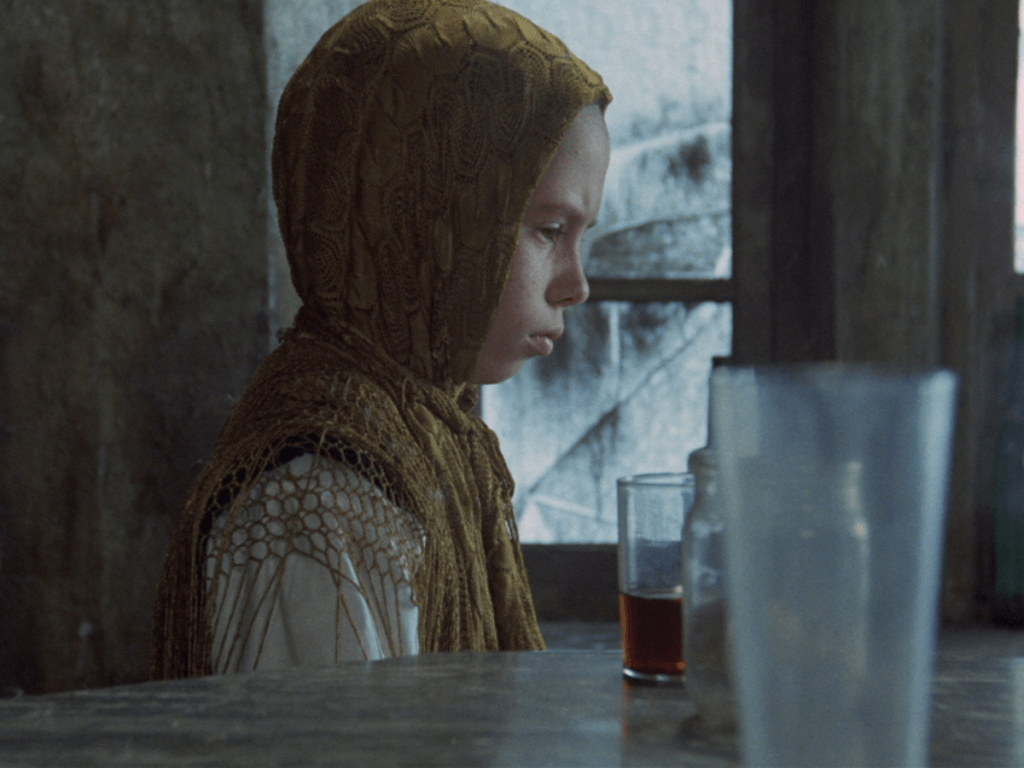
Tarkovsky follows the scene of the Stalker’s wife speaking directly to the audience with another, final scene that seems to be shared exclusively with the viewer. The Stalker’s daughter is a mutant, likely part alien, and unable to walk. The Stalker carries her home from the bar where his wife and daughter waited for his return, and Tarkovsky shows a dark, polluted lake through her eyes—except that it appears to her as glimmering and radiant. The film changes from monochrome to vivid color in her view, suggesting, in aesthetic terms, that she derives from the Zone. Stalker’s final scene unfolds from Monkey’s perspective: With her head turned downward, she appears to move a glass with the force of her mind. The audience must ask: Does the world contain fantastical, unknowable miracles witnessed and purveyed by those with faith? Or do the appearances of such wonders amount to just that—the mere appearance of a miracle with an origin grounded in reality? After all, an early scene shows a glass vibrating and seeming to move from the tremors of a passing train. Is the final display a result of practical phenomena or because of Monkey’s mental powers? And if the latter, are her mental powers divine or merely some mutation brought about by the same forces that created the Zone?
In the book, the authors seem to take the side of the scientist, Valentine Pilman, who develops the titular theory that the alien visit was tantamount to a roadside picnic—a random stop, after which tire tracks, apple cores, a fire pit, and other evidence of the picnic is left behind. In other words, the litterbug aliens stopped briefly and left just as quickly, leaving behind trace evidence of their visit. While explaining this, Pilman argues the definition of intelligence, describing it as “the ability to harness the powers of the surrounding world without destroying the said world.” Pilman argues that religion requires no intelligence. Believing in a god “allows you to have an unparalleled understanding of absolutely everything while knowing absolutely nothing.” Religion supplies “a highly simplified model of the world” through which people interpret “every event on the basis of this simple model.” True intelligence accepts that the universe is indifferent, according to Pilman—and, by extension, the authors. Indeed, their fiction often explores the narrow worldviews of humankind and the universe’s unknowability, highlighting our limited intelligence and our reliance on the certainty of religious systems.
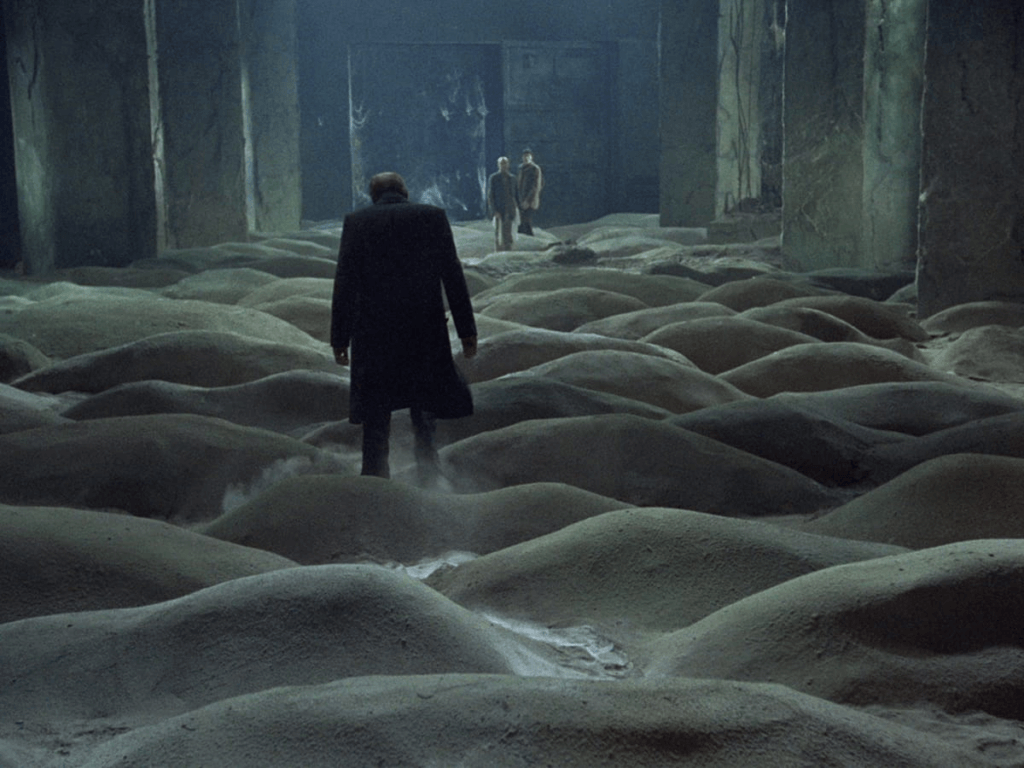
How strange, then, that Tarkovsky, so devout in his beliefs, sought to adapt Roadside Picnic given its authors’ thematic concerns and worldviews. Despite Tarkovsky’s writings about Stalker and the Strugatskys’ remarks on the Zone in the book, readers, viewers, and scholars have questioned the film’s imagery and its meaning. What does the Zone symbolize? On this point, Tarkovsky has been unequivocal, if somewhat contradictory, in his explanation: “The Zone doesn’t symbolize anything, any more than anything else does in my films: the zone is a zone, it’s life.” By this explanation, the Zone represents a condensed area of life’s dangers. What matters to Tarkovsky are the individuals who attempt to pass through, and their success depends on their “own self-respect” and “capacity to distinguish between what matters and what is merely passing.” However, Tarkovsky associates “self-respect” and “what matters” with faith more than with science or even art. He described the film’s theme concerning the Stalker’s faith as an existential crisis that shakes the character’s beliefs, only to restore them when his work allows him to shepherd people who “have lost their hopes and illusions.”
Still, as Stalker lends itself to interpretation, others have theories about its meaning and symbolism. Slovenian philosopher and cultural theorist Slavoj Žižek posits that “for a citizen of the defunct Soviet Union, the notion of a forbidden Zone gives rise to (at least) five associations.” Among them is the Gulag, the network of forced labor camps designed for political prisoners under Soviet rule, which were sometimes referred to colloquially as “the zone.” Some may associate the territory with a space cordoned off and rendered uninhabitable, such as the area surrounding Chornobyl—an association one could only make well after the film’s release, after the 1986 disaster, the same year as Tarkovsky’s death. The Zone might also bring to mind the protected regions that housed influential members of the state bureaucracy; forbidden territories, such as West Berlin; and desolate regions of Tunguska, Siberia, where a meteorite struck the planet in 1908. Intentional or not, the necessary ambiguity that Tarkovsky imbues the Zone with for his religious theme invites various interpretations.
Although Tarkovsky has clarified his artistic purpose with Stalker, the film remains a mystery for many viewers, who perceive the experience as ambiguous and imbued with interpretive potential. Perhaps Robert Bird, in his book Andrei Tarkovsky: Elements of Cinema, said it best: “The Zone is where one goes to see one’s innermost desires. It is, in short, the cinema.” If the Stalker serves as a Christ-like figure who remains committed to the faith required inside the Zone, the film also contains a statement against scientific or creative certainty. In this, Stalker’s closest thematic comparison is Yann Martel’s 2001 novel The Life of Pi, which was adapted into an Oscar-winning film by Ang Lee in 2012. Here, a storyteller spins a yarn full of improbable details, breathtaking sights, and almost magical developments—all involving a boy’s perilous journey and an unlikely method of survival. And in the end, he offers two possibilities: the allegorical story as presented, or a grimmer, less entertaining version that offers the listener little hope. The former option represents what it means to believe in a religion: a belief system, a choice, and a perspective through which one can see the world, and the Stalker undoubtedly prefers it. The Professor and Writer might prefer the latter version, grounded in facts and unromantic reality.
While Stalker maintains a reputation as a troubled production with a notorious aftermath for some of those involved, its influence continues to spread among all creatives: authors, filmmakers, game designers, and beyond. The central irony of Stalker is that Tarkovsky directed a film—a creative endeavor most closely aligned with the Writer—that attempts to denounce the power of an individual artist and access the wonders of faith. It is an endeavor not unlike Andrei Rublev’s paintings of religious icons, except that Tarkovsky must conceal his message. His film proves that the methods he denounces can have the intended impact, despite, or perhaps because of, what his film preaches. Stalker’s influence also extends beyond his artistic ambitions, offering a work of art that confronts the individual and invites them to determine its meaning according to their own worldview. Stalker’s interpretive potential, reinforced by the filmmaker’s entrenched aesthetic agenda and allegorical approach to narrative, speaks to his belief in the power of faith and, in turn, compels his audience to search inward for what inspires them. This sustains the film as an enduring work of art, one that, like faith, must be considered, questioned, and tested, yet can never be resolved with any certainty.
(Note: This essay was suggested and commissioned by Martha and posted to Patreon on April 29, 2025. Thank you for your continued support, Martha!)
Bibliography:
Dyer, Geoff. Zona: A Book About a Film About a Journey to a Room. Canongate Books, 2012.
Hoberman, J. and Gideon Bachmann. “Between Two Worlds.” Andrei Tarkovsky: Interviews. Edited by John Gianvito. University of Mississippi Press, 2006.
Kluger, Daniel. “Fables of Desire.” Science Fiction Studies, vol. 31, no. 3, 2004, pp. 415–17. JSTOR, http://www.jstor.org/stable/4241286. Accessed 24 March 2025.
Petric, Vlada. “Tarkovsky’s Dream Imagery.” Film Quarterly, vol. 43, no. 2, 1989, pp. 28–34. JSTOR, https://doi.org/10.2307/1212806. Accessed 24 March 2025.
Pontara, Tobias. “Beethoven Overcome: Romantic and Existentialist Utopia in Andrei Tarkovsky’s Stalker.” 19th-Century Music, vol. 34, no. 3, 2011, pp. 302–15. JSTOR, https://doi.org/10.1525/ncm.2011.34.3.302. Accessed 24 March 2025.
Salvestroni, Simonetta and R. M. P. “The Science-Fiction Films of Andrei Tarkovsky (Les Films de Science-Fiction d’Andrei Tarkovsky).” Science Fiction Studies, vol. 14, no. 3, 1987, pp. 294–306. JSTOR, http://www.jstor.org/stable/4239838. Accessed 24 March 2025.
Skakov, Nariman. The Cinema of Tarkovsky: Labyrinths of Space and Time. I.B. Tauris, 2012.
Tarkovsky, Andrei. Sculpting in Time: Reflections on the Cinema. Trans. K. Hunter-Blair. Austin: University of Texas Press, 2003.
Totaro, Donato. “Time and the Film Aesthetics of Andrei Tarkovsky.” Revue Canadienne d’Études Cinématographiques / Canadian Journal of Film Studies, vol. 2, no. 1, 1992, pp. 21–30. JSTOR, http://www.jstor.org/stable/24402079. Accessed 24 March 2025.
Žižek, Slavoj. “The Thing from Inner Space.” Angelaki, vol. 4, no. 3, 1999, pp. 221–231.
Thank You for Supporting Independent Film Criticism
If the work on DFR has added something meaningful to your love of movies, please consider supporting it.
Here are a few ways to show your support: make a one-time donation, join DFR’s Patreon for access to exclusive writing, or show your support in other ways.
Your contribution helps keep this site running independently. However you choose to support the site, please know that it’s appreciated.
Thank you for reading, and for making this work possible.
Brian Eggert | Critic, Founder
Deep Focus Review