Short Takes
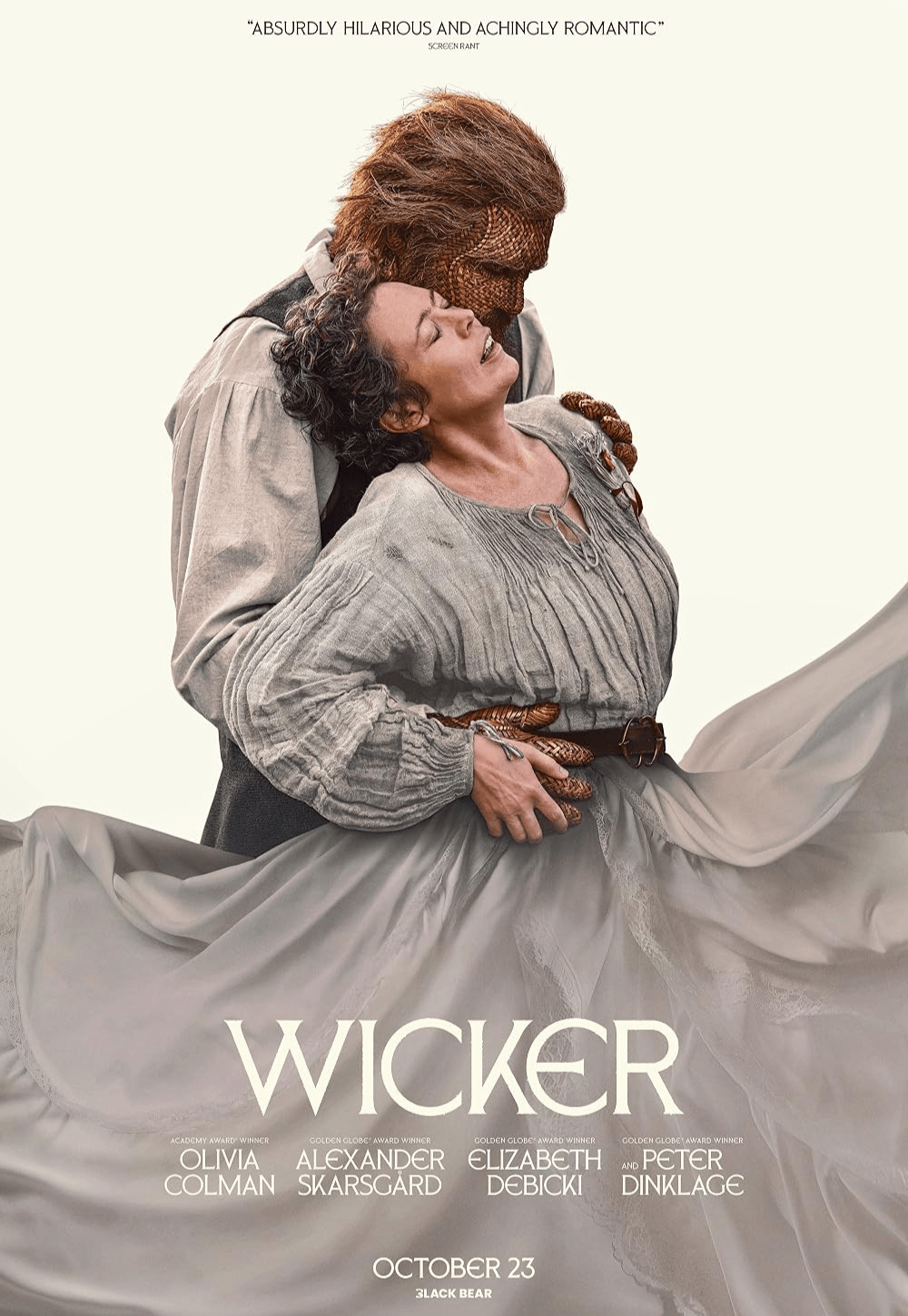
Wicker
By Brian Eggert |
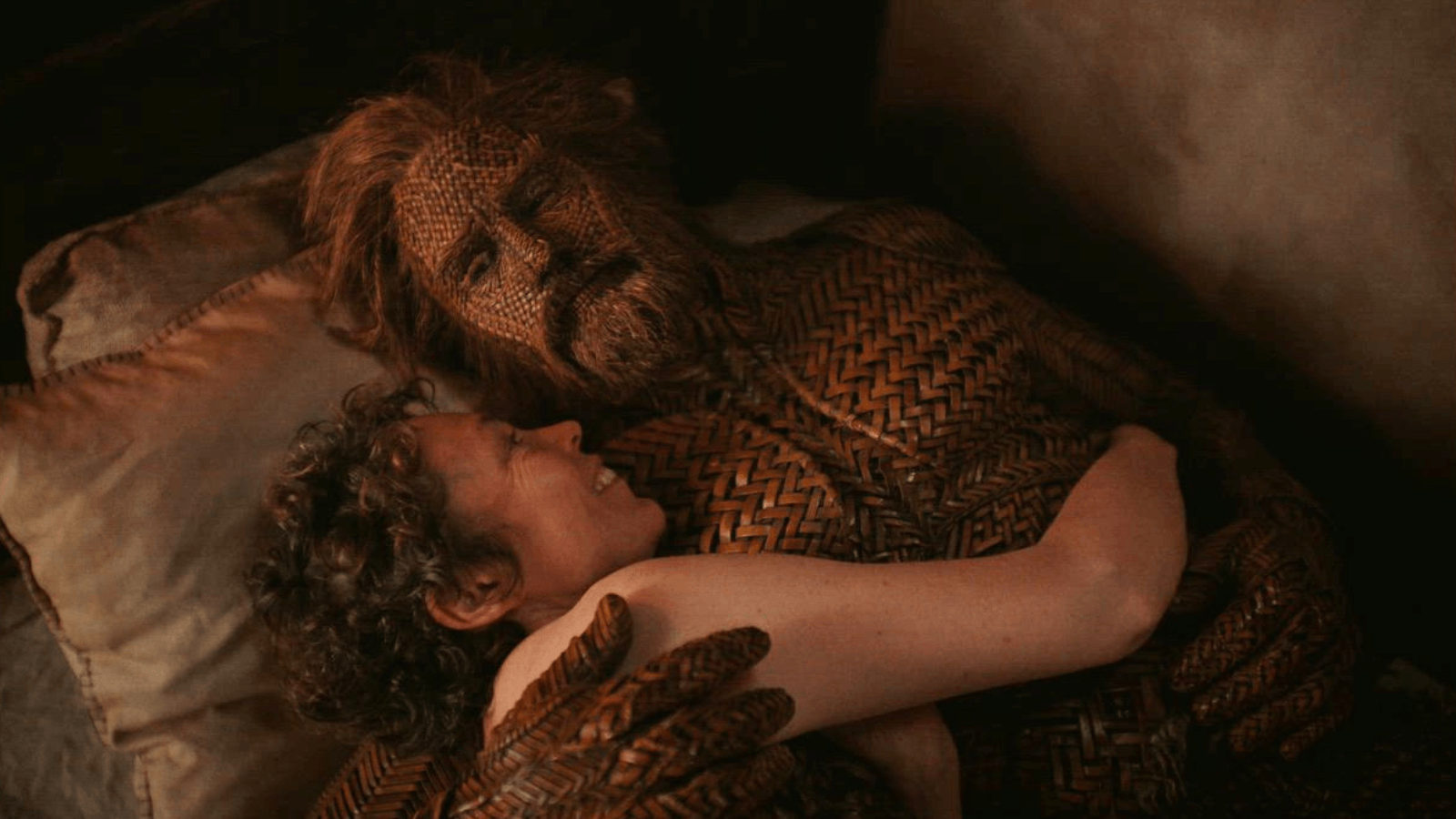
Wicker is a Rabelaisian fairy tale about jealous people who can’t stand to see others happy. Based on Ursula Wills’ short story The Wicker Husband, the screen version by the writer-director team of Eleanor Wilson and Alex Huston Fischer (who made the entertaining 2020 apocalypse comedy Save Yourselves!) is a tale worthy of a painting by Pieter Bruegel the Elder. This funny and horny Beauty and the Beast setup features moments of humanism set against grotesque peasant scenes, including public urination and some strange goings-on with a codpiece, a carrot, and a goat. The protagonist, played by the delightfully bawdy Olivia Colman, is a lonely, unibrowed fishmonger whose piscine aroma her community can smell coming. Known only as Fisherwoman, as everyone in this sixteenth-century English village goes by their vocation rather than their given name or surname, the miserable lady eventually goes to the magically endowed Basket Weaver (Peter Dinklage) to commission a husband. A month later, her woven man arrives to meet her needs in bed and around the house, much to the villagers’ frustration.
Part of their issue might be that Alexander Skarsgård plays the wicker husband, and his towering, muscular figure and buttery voice—not to mention his character’s husband bulge—would make anyone jealous. When he isn’t bringing the Fisherwoman sexual gratification, he’s fixing the leaky roof or performing other chores, and making other husbands look lazy and ineffectual by comparison. As for the sex, it’s best not to think about the reality (splinters?) and just accept the satire’s vague internal logic. And since he’s literally hollow, he doesn’t have much going on upstairs (his pet name for her: “Soft-bodied female animal”). But he’s been imbued with free will; with it comes selflessness and genuine love. In a town full of deeply unsatisfied women, the Fisherwoman is the sole exception, causing all manner of problems for other couples who wish they could communicate (or copulate) as well. Most aggrieved is the Tailor’s Wife (Elizabeth Debicki), a bully and elitist who instructs new wives to approach marriage as transactional rather than a partnership. The result has been a whole village of repressed people too concerned with fulfilling stereotypical gender roles to communicate their desires. The Fisherwoman and her Wicker Husband threaten to provide an appealing alternative, which would discredit the Tailor’s Wife’s authority. And she can’t have that.
The story plays out rather predictably, with a near-tragic turn of events and a commentary on human nature when the Fisherwoman realizes, “It’s easier to believe the bad than the good.” But the performances and stunning production make Wicker unique. Lead prosthetic makeup designer Joe Dunckley from Weta Workshop oversaw the impressive, mostly practical effects that render Skarsgård’s character into a tangible-looking wicker man, with CGI used to create his empty appearance. The cinematography by Lol Crowley (The Brutalist, 2024) and earthy production design by Renátó Cseh create a remarkable, painterly visual experience, reminiscent of carnivalesque art from the era. Technical execution aside, fairy tales often take the form of lessons, yet they seldom leave room for in-depth characters or backstories, which means Wicker tends to draw out cold appreciation rather than impassioned engagement. Still, it’s a well-acted, worthy fable about honesty and communication in relationships, without which one might be overcome by insecurity, suspicion, anger, and inadequacy.
Like DFR? Support us.
This site exists because readers like you care about film. If DFR has enriched your experience with movies, I’d be grateful for your support. You have a few options:
• Join DFR’s Patreon community
• Make a one-time donation on PayPal
Whatever option you choose, it helps keep my work independent. And it means a lot to me.
Thank you for reading, and for making this work possible.
Brian Eggert | Critic, Founder
Deep Focus Review