The Weight
By Brian Eggert |
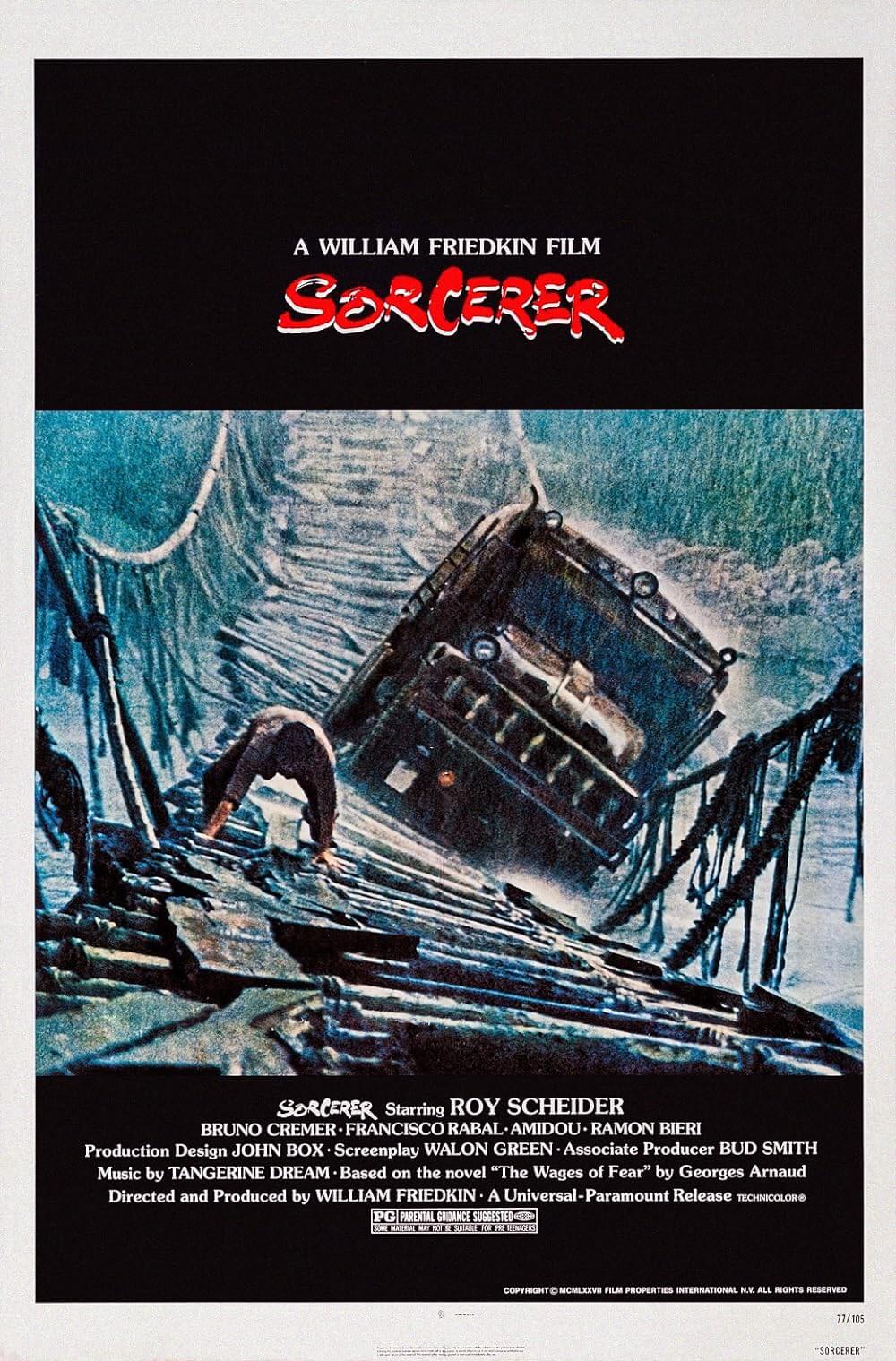
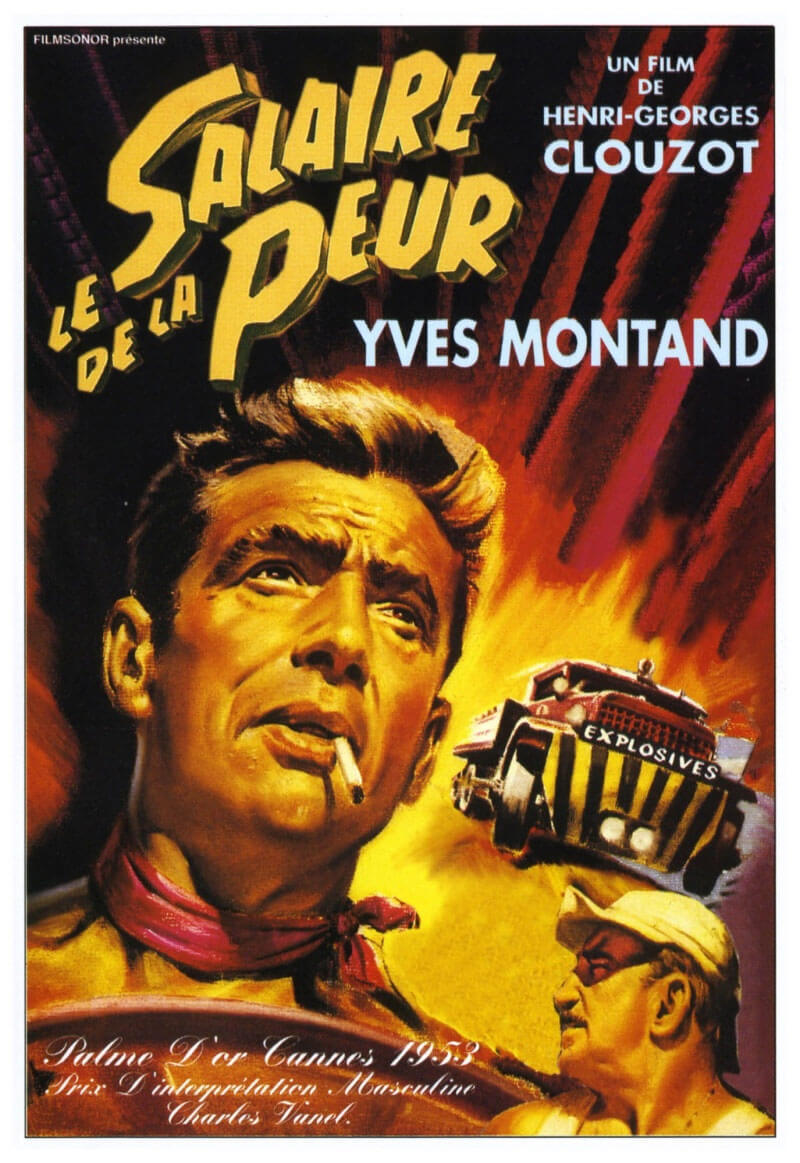
Film producer Padraic McKinley makes his directorial debut with The Weight, a tense but beautifully shot Depression-Era yarn about a group of prisoners who, enlisted by a crooked warden, must transport stolen bars of gold through 100 miles of Pacific Northwest forest to earn their freedom. Refreshingly grounded in human beings and the natural world, the film borrows much of its tone and even color palette from Sorcerer (1977)—William Friedkin’s remake of Henri-Georges Clouzot’s The Wages of Fear (1953)—right down to a breathless bridge crossing. Don’t expect explosions or elaborate CGI worlds here. The film is committed to its austere story, following a few desperate men, headlined by a committed Ethan Hawke, with heavy burdens on their backs. The flashiest, most high-octane sequence involves a chase between old-timey cars on a dirt road. And as dull as that may sound to some, the film is a charged experience, refreshingly simple and engrossing, with subtle touches to make this nearly century-old world seem reflective of today.
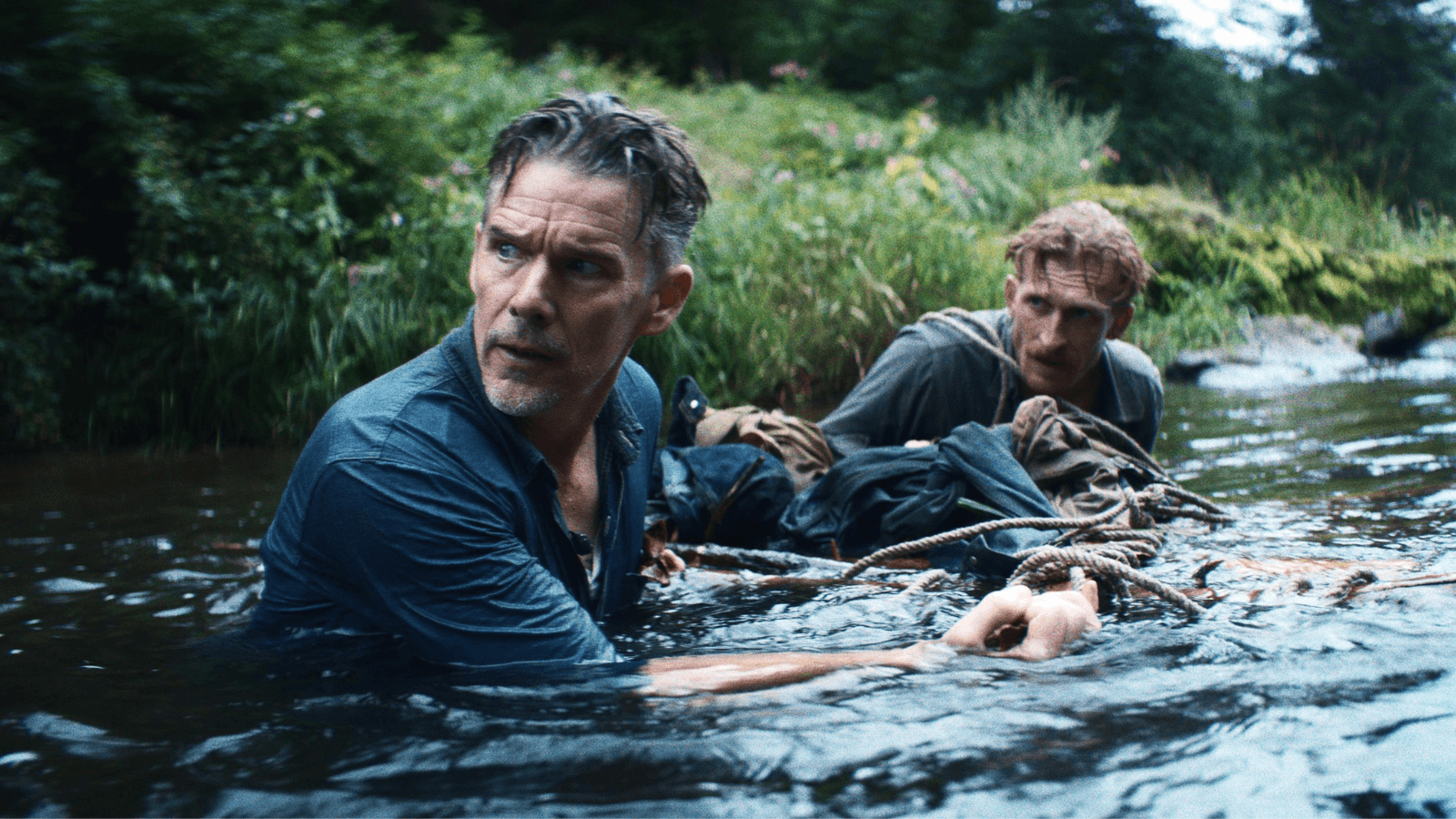
Set in Eugene, Oregon, in 1933, the film follows intelligent, out-of-work widower Samuel Murphy (Hawke) as he tries to raise his young daughter, Penny (Avy Berry), under dire conditions. Penny even reluctantly lets him sell her Teddy Bear for cash. Evicted from their apartment, they search for a new place to live, only for Murphy to end up arrested and Penny thrown in the foster system. Vowing to return before she can be adopted by another family, Murphy finds himself in the Deschutes County convict labor camp, overseen by the charmingly duplicitous Warden Clancy, played by a tobacco-spitting Russell Crowe. Murphy spends months building a road, swinging a pickaxe at boulders and wondering how he’ll get back to Penny. When he proves himself to be smarter than the average convict, he impresses Clancy, both being veterans of the Great War. That’s when the Warden proposes a solution to his prisoner’s dilemma: Roosevelt’s administration plans to commandeer mined gold from the region to combat the Depression. Clancy and other corrupt authorities want to steal it before that happens.
In a too-good-to-be-true deal, Clancy promises to grant Murphy and three other prisoners of his choosing their freedom if they can pull off a dangerous secret mission, transporting gold over a six-day journey through dense forests, across rivers, and over a gorge. Murphy selects the only three men at the prison he’s spoken to, and each eventually reveals a backstory about his persecution by a dishonest, exploitative system. Among them are Singh (Avi Nash), a socialist convicted for resisting arrest; the young and naive Olson (Lucas Lynggaard Tønnesen), whose Scandinavian family was targeted by bigoted officials; and Rankin (Austin Amelio), a blowhard incapable of speaking at a low decibel level. They walk with heavy backpacks loaded with their stolen booty, ushered by two shifty armed guards, Amis (Sam Hazeldine) and Letender (George Burgess). They’re later joined by Anna (Julia Jones), an indigenous woman who wants to escape living in servitude to white colonizers. Each of these prisoners feels perhaps too conveniently written as a redeemable victim of a corrupt authority figure. And while that bonds us to the prisoners, it’s also questionable that there’s not one genuine criminal in the bunch, whereas Friedkin allowed his foursome in Sorcerer to consist mostly of deplorable people.
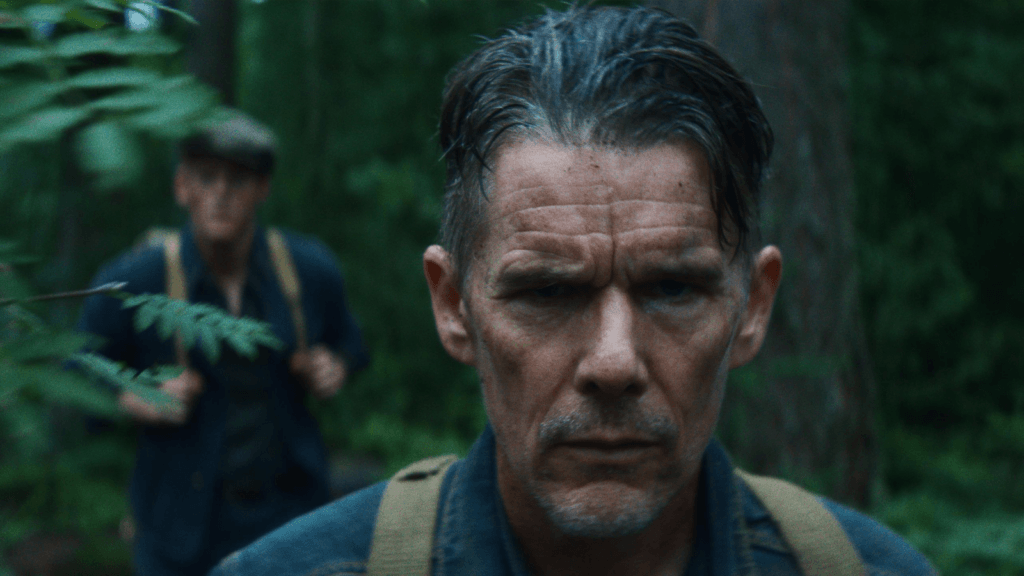
Matthew Booi and Leo Scherman conceived the story, and Booi co-wrote the screenplay with Matthew Chapman and Shelby Gaines. The writers draw inspiration from sources beyond Sorcerer, from the greedy double-crosses of John Huston’s The Treasure of the Sierra Madre (1948) to the wilderness stalking of John Boorman’s Deliverance (1972). Many of The Weight’s best sequences feel like variations on scenes from these sources, but they’re also thrilling enough to stand on their own. When the group must cross a rickety walking bridge that will only hold a single man, but not with a pack of gold on his back, this leads to a relay that requires tossing heavy bars from one end to a mid-bridge Murphy, who then heaves the bricks to the other side. If they drop one into the river, they can kiss their early release goodbye. That is, if Clancy decides to keep his word. But he’s not the only threat. Other miners and opportunists in the area would happily kill them all for that much gold.
McKinley’s direction blends stylistic choices that feel like throwbacks to a hundred years ago with more modern flourishes, as cinematographer Matteo Cocco’s occasional faint iris effect is contrasted by his more contemporary handheld cameras and wide-angle lenses. Filmed in Bavaria, the production makes excellent use of the expansive forest in sweeping landscape shots. McKinley and co-editor Matthew Woolley use a pointed story structure, with titles counting down the group’s arrival and several chapter-like fades to black, lending the picture a sort of grandiosity. The music by co-writer Gaines and his brother Latham rattles and scratches at the eardrums with a metallic, clanging sound, as though playing from an old, rusty factory. Hawke, too, lends a modern sensibility to the picture as Murphy, who’s the smartest man in any room, which makes some of his dialogue, particularly his use of “ain’t,” seem like an affectation. But the actor makes it work, playing a tormented character desperate to get home. Hawke and Jones’ characters also share a subtle hint of camaraderie and, just under the surface, a potential romance.
If there’s one false note in the picture, it’s the anachronistic rock-and-roll music at a crucial moment in the finale, recalling Michael Mann’s approach to Public Enemies (2009), another ‘30s-set story with distractingly modern formal touches throughout. This moment in The Weight harkens back to its opening scene in a too-cute, full-circle conclusion. This feels like McKinley patting himself on the back for completing the film’s journey. There’s an undeniably earned joy about this moment, but it’s uncharacteristic happiness, combined with the scratchy music, might do the film’s otherwise high-pressure, melancholic tone a disservice. Still, the film is worth seeking out for the stunning imagery and Hawke’s terrific performance. After its debut at this year’s Sundance Film Festival, Vertical picked up the film for distribution. And because of its unflashy premise, it’s almost guaranteed to be one of those underseen films that people regret not seeing earlier.
Thank You for Supporting Independent Film Criticism
If the work on DFR has added something meaningful to your love of movies, please consider supporting it.
Here are a few ways to show your support: make a one-time donation, join DFR’s Patreon for access to exclusive writing, or show your support in other ways.
Your contribution helps keep this site running independently. However you choose to support the site, please know that it’s appreciated.
Thank you for reading, and for making this work possible.
Brian Eggert | Critic, Founder
Deep Focus Review