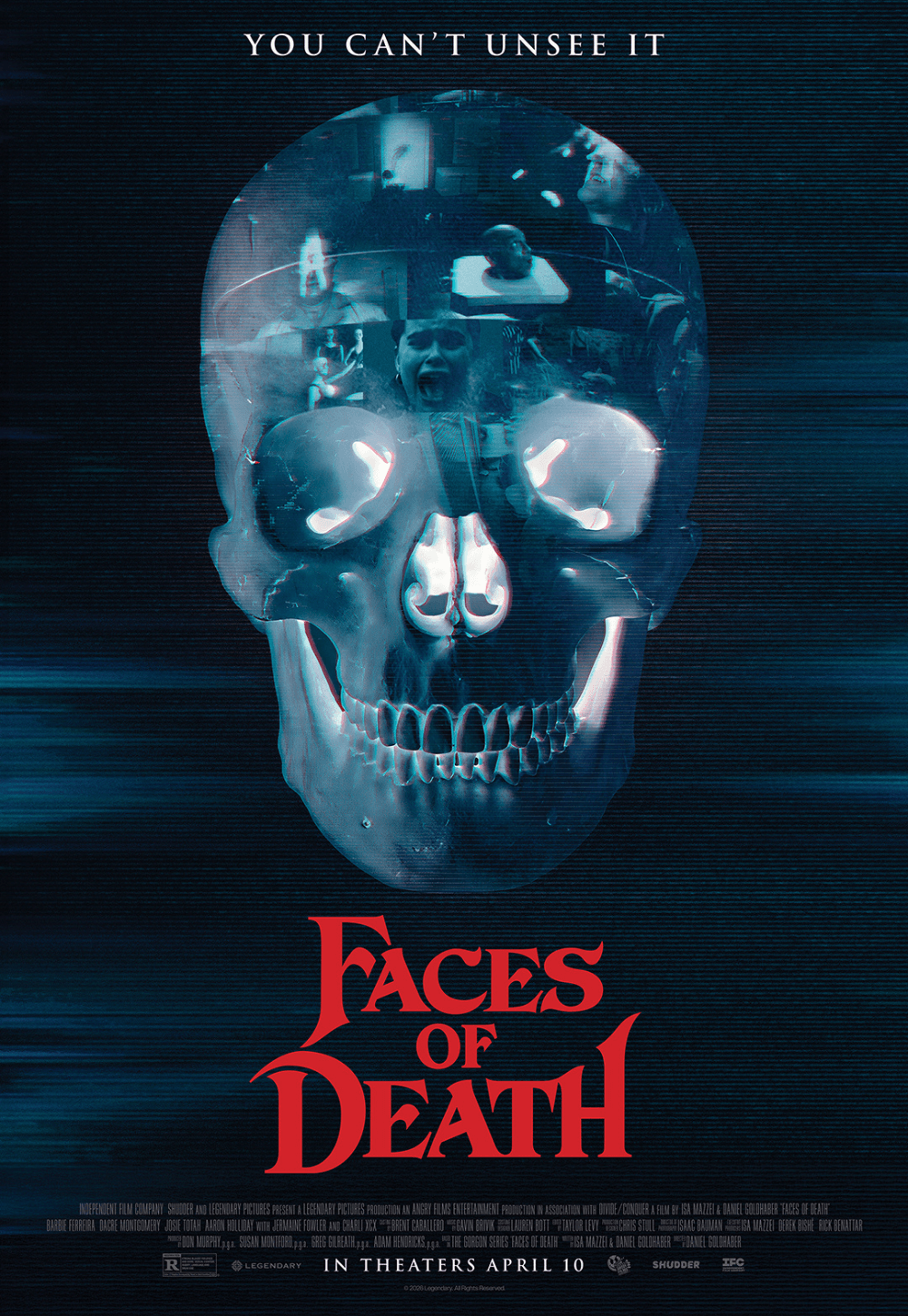
Faces of Death
By Brian Eggert |
Growing up in the VHS era, you couldn’t escape rumors about the original Faces of Death. The local video stores didn’t carry it. Some countries banned it. And if your friend happened to snag a bootleg copy, you watched while their parents were sleeping upstairs, blissfully unaware of the mild trauma unfolding in the basement. Once you realized that most of the snuff-style footage in this 1978 release was staged, you might think the very real news and accident footage seemed muted by comparison, as though watching Faces of Death had almost desensitized you to the disturbing real-life imagery sprinkled throughout. But that was never the case with me. Admittedly, I could never finish watching the faux-documentary horror flick, knowing that about half of it was real. The filmmakers staged the nastiest-looking moments, sure, and they were even fascinating in a How’d they do that? kind of way. But the actual footage of animal killings, dead bodies, and other onscreen deaths proved too difficult to endure. Fortunately for the remake—set in the present, with a premise that confronts social media consumption and the ethics of viewership—its creators know better than to exploit actual human deaths or animal suffering for entertainment. Here’s a horror movie that could have appealed to the lowest common denominator; instead, it resolved to have a point of view.
Just as the so-called torture porn subgenre reflected America’s post-9/11 anger and the sense that horrible violence could even affect those who seem safe, the new Faces of Death asks about the consequences for a culture that spends far too much time watching horrible stuff on platforms such as TikTok, Instagram, and YouTube. Users treat people in such “content” as something other and decidedly less than real. They consume videos in millisecond bites, passively thumbing through posts for a quick laugh, like, or shock. Sometimes the footage is so awful, they just have to share it. For some, a clip from a deadly car wreck, a Karen meltdown, or footage of a random beating earns the same passive, momentarily interested reaction as that video of a puppy meeting a cat for the first time. Faces of Death examines the ethics of such viewership, even as it exploits its themes for commercial appeal in a part serial-killer movie, part murder mystery. Wrapped in a plot that recalls paranoid thrillers such as Blow-Up (1966) and The Conversation (1974), but with an acidic Digital Age twist, the new version is smarter than one might expect for a horror remake based on a seedy movie that spawned several sequels and an infamous cult reputation.
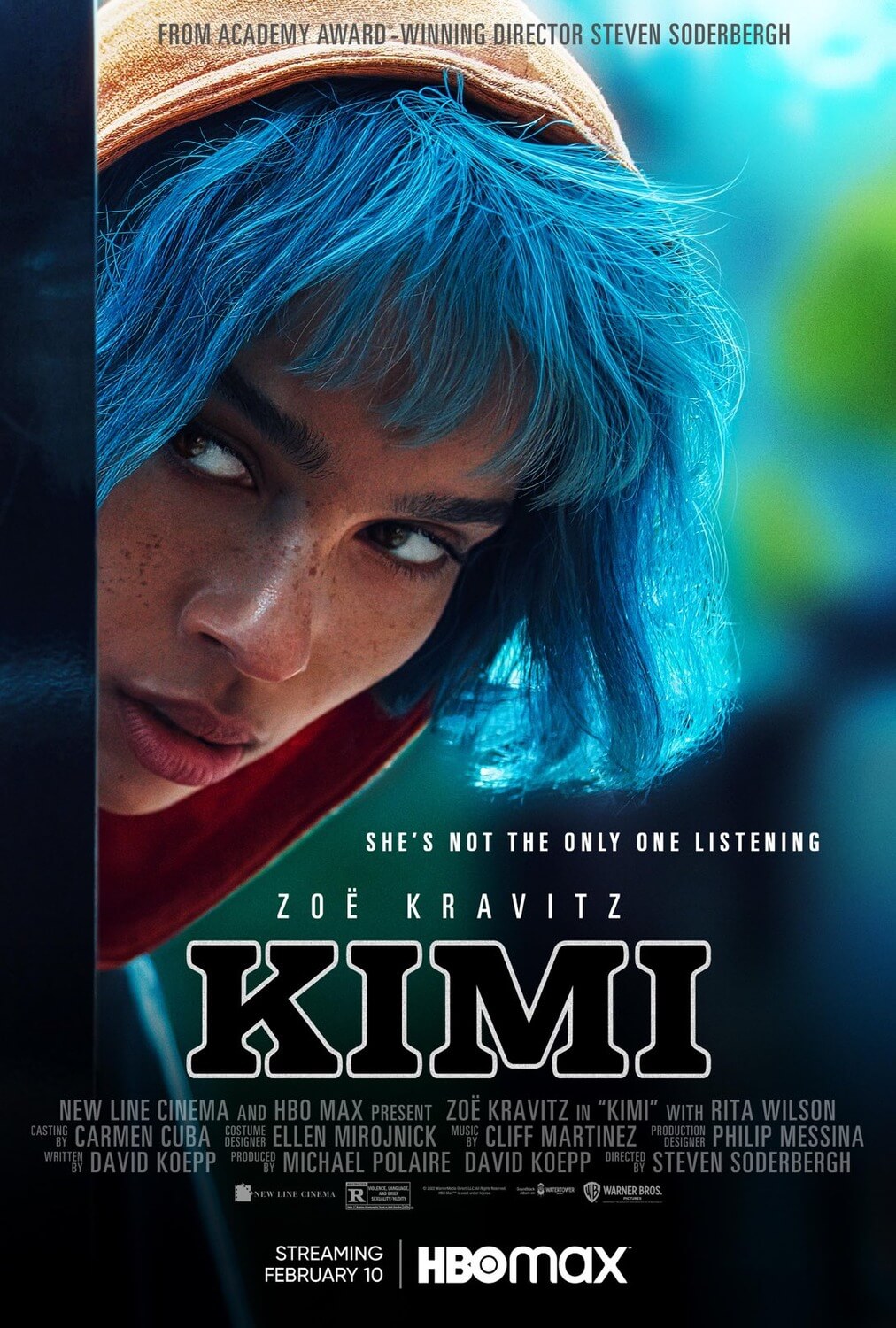
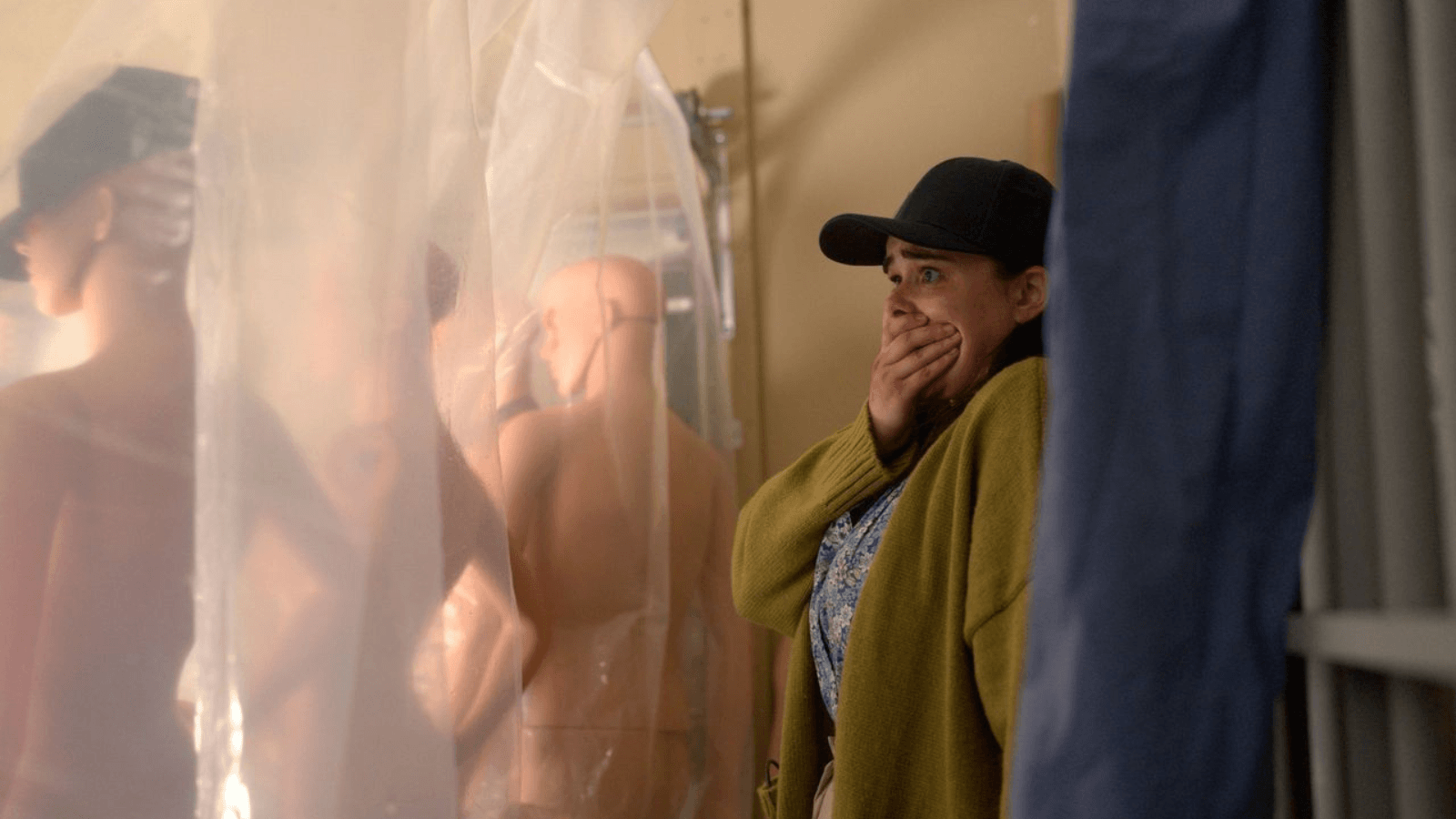
Faces of Death is described as “A film by Isa Mazzei & Daniel Goldhaber” in the end credits. And while Goldhaber receives sole director credit and both receive screenplay credit, they shared responsibilities here, just as on their earlier features, Cam (2018) and How to Blow Up a Pipeline (2022). Their new movie plays out like a horror-infused version of Steven Soderbergh’s KIMI (2022). Barbie Ferreira plays Margot, who moderates user-submitted videos at Kino, a platform similar to TikTok. Popping Adderall to work at the speed of Charlie Chaplin’s Little Tramp tightening bolts on a conveyor belt in Modern Times (1938), Margot watches a few seconds of each video and rapidly flags content warnings. Per Kino policy, she removes anything involving sexuality or encouraging drug use, but she allows injuries, deadly accidents, assaults, and even what she presumes are staged executions shot in a style reminiscent of the original Faces of Death—a beheading, an electric chair execution, and a head crushed and the brain eaten, all uploaded by the same user.
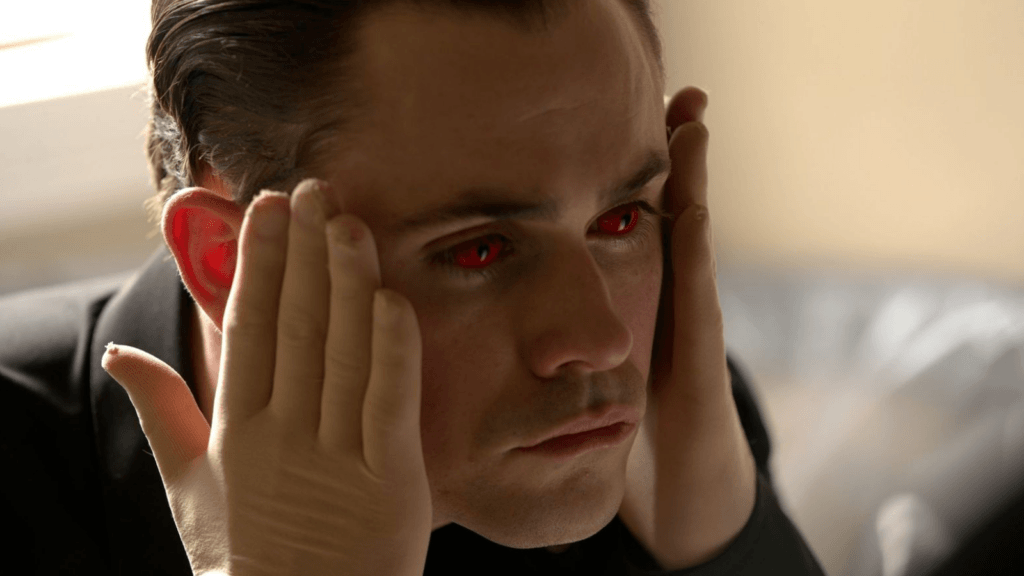
Concerned that the three execution videos are real, Margot wants to involve the police. Her boss (Jermaine Fowler) shuts down the idea, reminding her, “Escalating to law enforcement brings negative attention to the platform.” He explains them away as part of the “DIY horror” craze. Margot doesn’t buy it. She knows all too well how real videos can be, often encountering people who recognize her from a notorious “train video.” Increasingly obsessed and frantic, she resolves to investigate, wielding the power of Reddit forums. Meanwhile, we meet a guy with pantyhose over his face under a featureless white mask, with striking red contact lenses peering out from the eyeholes. Dacre Montgomery plays the resident psychopath, who’s bent on achieving online fame by remaking 1978’s Faces of Death with viral videos. He kidnaps people and records himself torturing them in a style based on the original movie. Then he posts the videos to Kino, where viewers assume they are fake. When Margot tracks him down, she uncovers his disturbing secret, leading to a bloody finale saturated in on-the-brink-of-madness laughter.
The production is slickly assembled. Composer Gavin Brivik’s throwback synth music is slathered throughout, and cinematographer Isaac Bauman’s camera keeps the viewer glued to every moment. Much like the original, the new version uses actual online videos in the diegesis, though the worst parts have been edited out. Others, such as the one Margot is infamous for, have been staged. The material must have resonated with Ferreira, who achieved fame on Tumblr before becoming a model and actor. Likewise, Charli XCX, who plays a small role as Margot’s snotty coworker, got her start by posting songs to MySpace. However, Montgomery’s genuinely unsettling performance steals the movie—it’s fully committed, as though Christian Bale’s Patrick Bateman or the killer from Peeping Tom (1960) had access to social media. The role makes the creepy, angry character Montgomery played in Netflix’s Stranger Things look almost reasonable by comparison. Although the filmmakers completed work on Faces of Death almost two years ago, the production struggled to find a distributor given its subject matter. IFC eventually picked up the release for a theatrical run, with its home slated for the horror streaming app Shudder.
Faces of Death is smarter than I expected it to be. Though one might accuse it of trying to have it both ways. Mazzei and Goldhaber censure at once the dangers of social media and the audience for feeding the algorithm that proves “people love remakes,” even as they supply a particularly good franchise restarter rooted in extreme, albeit fictional, violence and staccato clips of viral videos. As Fowler’s character explains: “The first rule of content creation: give the people what they want.” Mazzei and Goldhaber deliver an unmistakable commentary on a desensitized, overstimulated world—how the masses flock to such videos and posts, the more extreme, the better. Still, the result is more effective than, say, the Purge series, which critiques America’s culture of violence while serving a heaping pile of violent entertainment. Mazzei and Goldhaber’s film reminds us that enough horrible things are happening in the world without seeking them out on social media, where someone else’s pain is turned into our entertainment. If it’s a horror show you’re looking for, get your kicks in a solid horror movie instead, one that serves up thoughtful thrills and in which no one had to die to get it made. On those terms, Faces of Death will do nicely.
Thank You for Supporting Independent Film Criticism
If the work on DFR has added something meaningful to your love of movies, please consider supporting it.
Here are a few ways to show your support: make a one-time donation, join DFR’s Patreon for access to exclusive writing, or show your support in other ways.
Your contribution helps keep this site running independently. However you choose to support the site, please know that it’s appreciated.
Thank you for reading, and for making this work possible.
Brian Eggert | Critic, Founder
Deep Focus Review