Reader's Choice

Aniara
By Brian Eggert |
When Harry Martinson published his epic poem Aniara in 1956, scholars called the Swedish poet’s book-length work an essential text for the Atomic Age, comparing his accomplishment to Homer, Dante Alighieri, and T.S. Eliot in its scope and symbolism. Following a spacecraft that, while transporting humans from a ruined Earth to a Martian colony, veers off course and drifts aimlessly through the nothingness of space, Martinson sought to capture humanity’s “emptiness” and feelings of oppressive ennui for a species hurtling toward its annihilation. Martinson saw little hope after World War II and the threat of global nuclear disaster in the Cold War. Over a half-century later, when Swedish filmmakers Pella Kågerman and Hugo Lilja adapted the poem into a feature film in 2018, two years into the first Trump presidency, it captured the prevailing despair over climate change doom—the persistent feeling of helplessness to combat the capitalistic forces that continue to deny or conveniently ignore the warning signs outlined by the scientific community. Watching it today, Aniara stings even worse.
Martinson’s poem used no shortage of symbolic imagery, deploying science-fiction tropes to explore humanity’s brutality and self-importance against the sublimity of Nature. Martinson scholar Eric O. Johanneson observes, “In Aniara evil in the form of man’s inhumanity to man and his eternal instinct for destruction attain demonic proportions.” Before Aniara, Martinson wrote poetry about Nature and harmony—its spontaneity and beauty. But humanity betrayed those qualities by inventing weapons of mass destruction, industries that leave the environment in ruins, and conceptual limitations through restrictive frameworks such as time, borders, politics, media, and mathematics. For Martinson, these hinder the potential of humanity, which operates within invented boundaries, consuming the possibilities of creative thinking, imagination, and emotion. Martinson sought to champion imagination and art, which were constantly curtailed by humanity’s attempt to bring order to the universe.
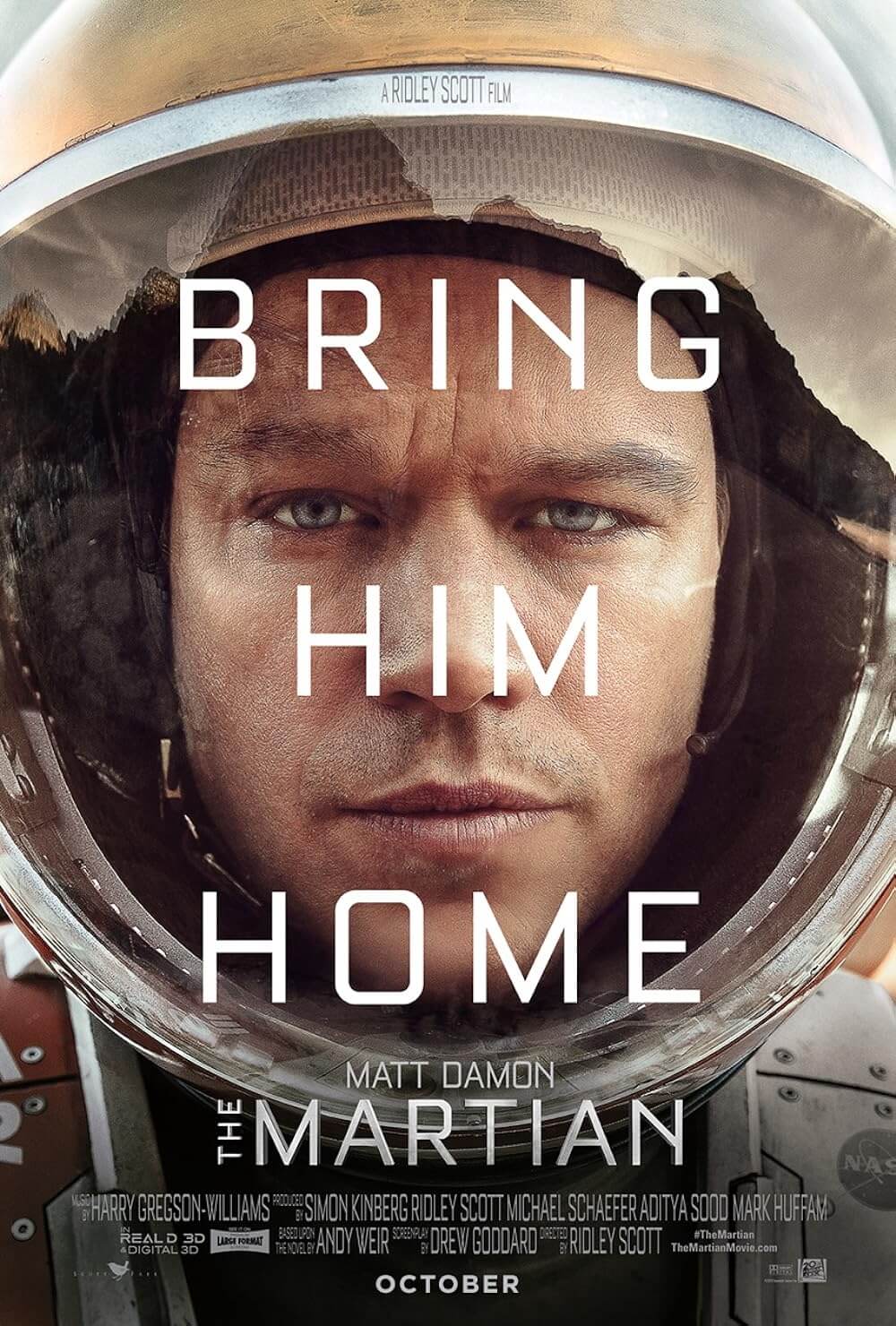
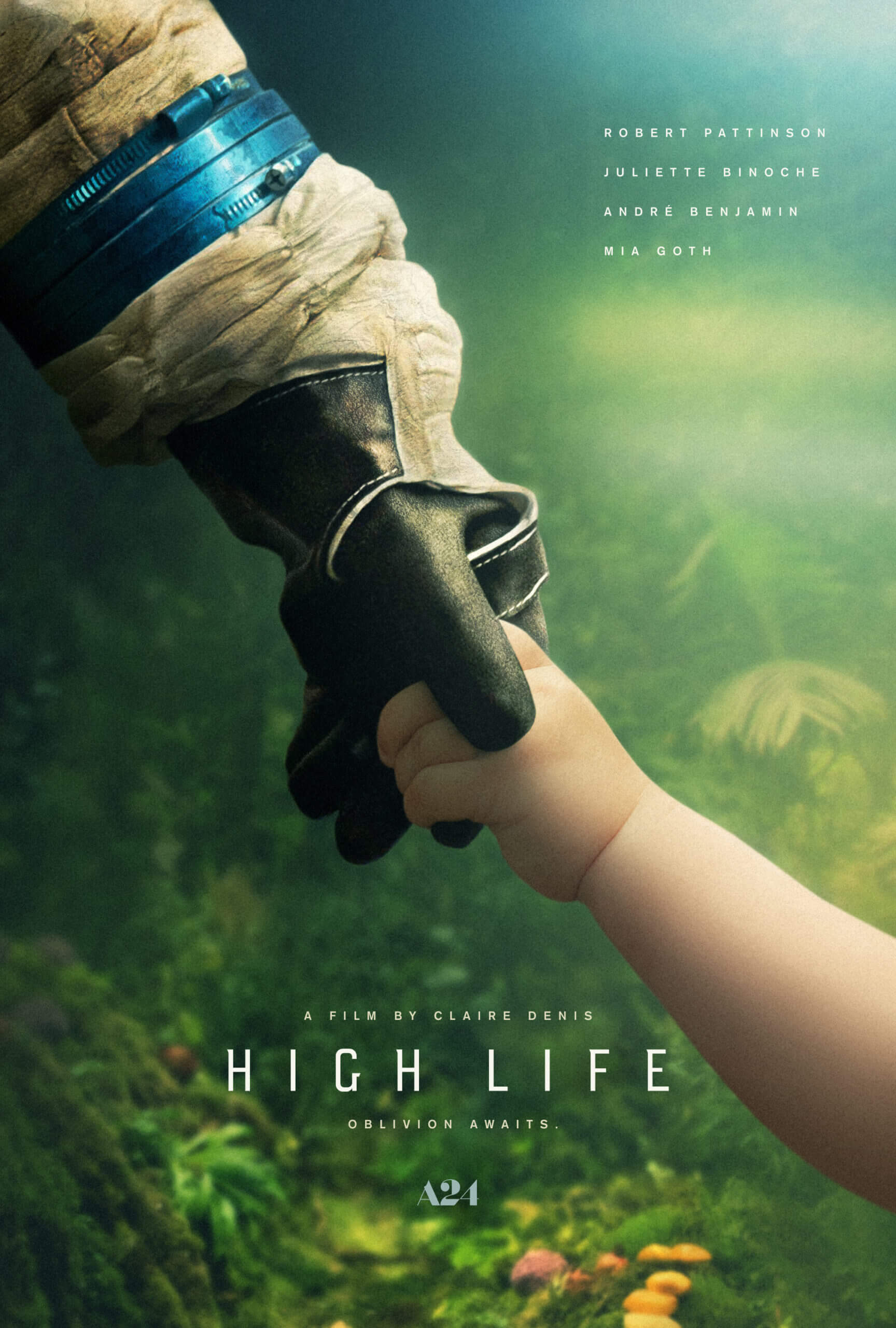
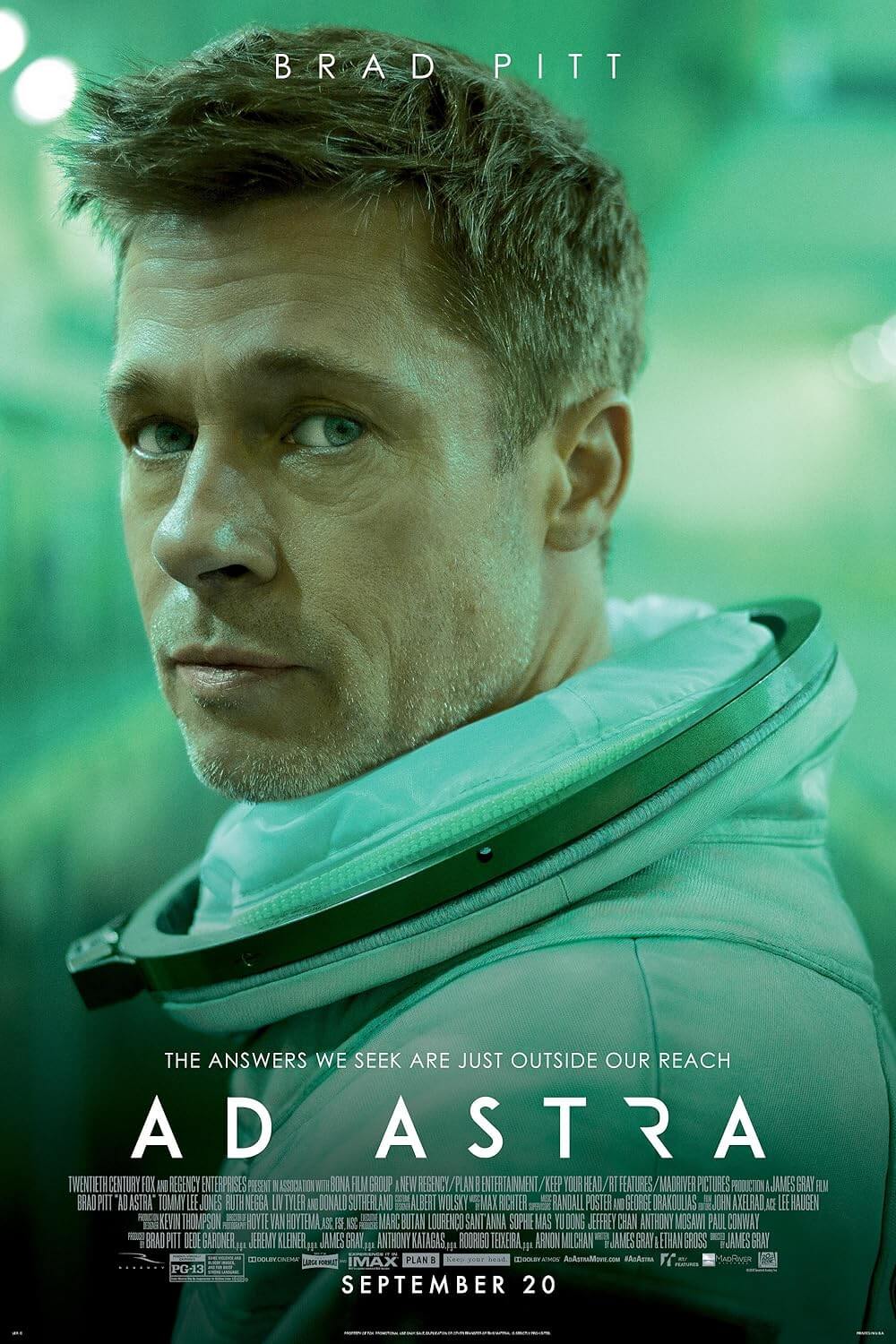
From this launchpad, Kågerman and Lilja craft a visionary film—one that is profoundly despairing yet also worthy of comparison to the great existential space epics: MGM’s Forbidden Planet (1956), the Czech epic Ikarie XB 1 (1963), Stanley Kubrick’s 2001: A Space Odyssey (1968), Andrei Tarkovsky’s Solaris (1972), Robert Zemeckis’ Contact (1997), Danny Boyle’s Sunshine (2007), Christopher Nolan’s Interstellar (2014), and James Gray’s Ad Astra (2019). With the exception of Claire Denis’ High Life (2018), few examples in the sci-fi subgenre of space travel have treated its subject with such hopelessness. More often, these vast journeys into the unknown result in promising discoveries, usually involving a new understanding of self—from transcending into a Star Child in Kubrick’s masterpiece to a realization that love is a cosmic force in Nolan’s most emotional film. But Aniara is a film so exceptional in its despondency and melancholy that it affirms every doubt about humanity’s worth.
“Bye, bye, Earth,” says a small child on a transport ship to Aniara, a massive spacecraft that operates like an ocean cruise liner and looks like a monolith from the outside, a mall from the inside. Equipped with twenty-one restaurants, fresh air supplied by algae, and every other amenity one could imagine, the resident Astronomer (Anneli Martini) promises, “You’ll want for nothing.” The three-week journey to Mars leaves behind an Earth ravaged by natural disasters seen over the opening credits. But this “routine voyage” goes awry in the first week when some space junk—bolts and metallic debris left in space by humans, incidentally—breaches the hull of the spaceship, requiring a sudden maneuver and ejection of their nuclear fuel supply to avoid a disaster. The Captain (Arvin Kananian) soon announces the ship has no power to steer; they cannot get back on course until they can turn around using a celestial body’s gravity. When will that be? “Definitely no more than two years,” the Captain assures. But that estimate is nearly six million years off.
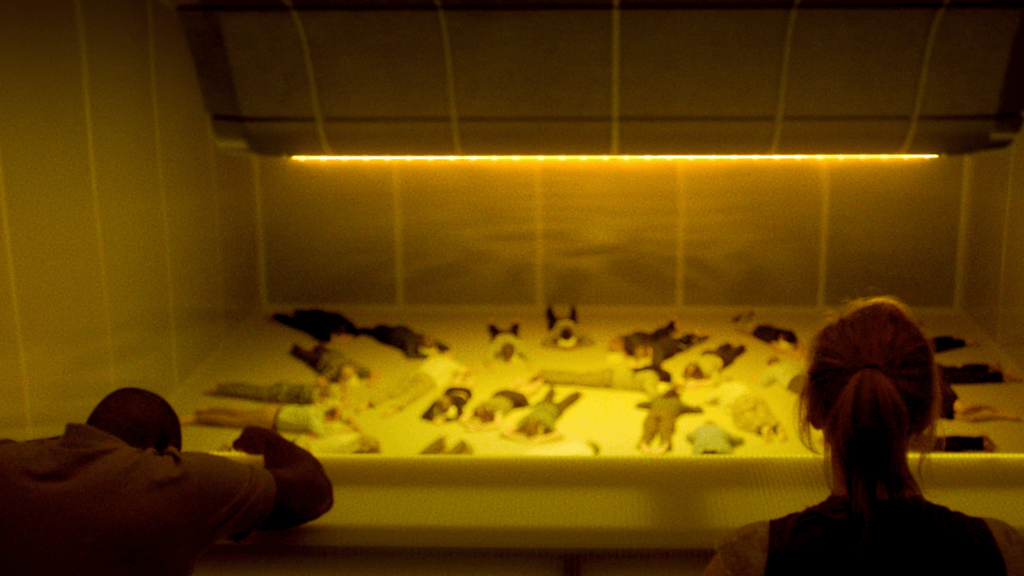
Although the film offers at least one potential solution to the predicament—a mysterious space spear the ship’s engineers never quite figure out—problem-solving the situation isn’t Aniara’s point. Rather, what’s at stake is how humanity copes, or doesn’t, with their grim fate. Central to the story is the Mimaroben (Emelie Garbers, aka MR), who operates a unique distraction called the Mima. This machine draws from the users’ collective memories to create a vision of a pre-disaster Earth. When a user enters the Mima room and rests face-down, the living device, which looks like a pool of fire on the ceiling, conjures serene mental images, which the Mimarobe can monitor.
At first, the Mima becomes a vital method of distraction for the passengers, who rely on regular escapes into its projections. But sometime in the third year of their voyage, its consciousness becomes despondent, reflecting the vile memories of forest fires and other catastrophes back at the passengers. Martinson took the word “Mima” from the Latin mimus, also the root word for a mockingbird—an animal that sings the songs of other birds. When the only songs they hear involve dread and terror, those are the only ones they learn to sing. The minds of the ship’s passengers are stuffed with awful memories of Earth’s collapse but also the same impulses that led to the planet’s environmental collapse. Because humanity pursued greed and technological progress instead of revering art and nature, the Mima is overwhelmed by negative imagery and chooses to terminate its own life. Just before imploding, the Mima declares, “I want peace. I will be done with my displays. There is protection from nearly everything, but there is no protection from mankind.”
Martinson conceived of the Mima as a symbol of artistic creation, which he believed was our species’ primary redeeming factor. Its self-termination is reflected in the long-simmering relationship between MR and a pilot, Isagel (Bianca Cruzeiro), who has captured MR’s gaze and who, in the original poem, has a “soul” comparable to the Mima. However, the continued degradation of conditions on the ship wears on Isagel, despite her eventual romance with MR. She’s not alone. Suicides run rampant in the fourth year, upwards of forty a month. The survivors take solace in order, with the Captain controlling the ship with an iron hand (“We can do whatever we want,” he declares, before making MR a scapegoat after Mima’s death). The passengers turn to cultish behavior. Bizarre rituals, orgies, and worship spread around the ship. At one such orgy, Isagel becomes pregnant. She gives birth to a boy. Just as MR builds a holographic array outside of the vessel to compensate for Mima’s death, projecting an image of streams and plantlife to distract from the oppressive darkness (“A substitute for a substitute,” the Astronomer calls it), Isagel takes her child’s life and commits suicide.

Compared to many Hollywood productions, Kågerman and Lilja’s grim but thoughtful film is a low-budget affair, costing roughly $2 million. It’s a testament to the artistry of these filmmakers that, on such a modest budget, they produce what in Hollywood—with its inflated means of production—would cost $100 million (the reported price tag of a comparable film, Ad Astra). Aniara is Kågerman and Lilja’s first and only feature-length film as of this writing, and their efforts are impressive. The Mima, spacecraft exteriors, and design of the ship’s interiors show a convincing blend of CGI and tactile production values. But only the Mima could be called beautiful. Cinematographer Sophie Winqvist often relies on intimate closeups and handheld (but not distractingly wobbly) camerawork, which give the material a sense of intimacy. The three editors refuse to luxuriate or dwell, as such shots might convey a sense of awe or wonder. Yet, there’s no wonder to be found in Aniara, only the reality that humans seem to have an innate impulse toward self-destruction.
However bleak the concept, the film hasn’t been the only adaptation; Martinson’s poem has been made into an opera, planetarium show, and TV movie. Elsewhere, Armando Iannucci (The Death of Stalin, 2017) found madcap humor in a similar premise with his riotous, too-short-lived HBO series Avenue 5 (2020-2022). The show involves an interplanetary cruise ship knocked off course, similar to Aniara—though its creator has never credited Aniara, neither the poem nor the film, as his inspiration, only a general affinity for science fiction. While Iannucci doesn’t doom the luxury liner’s crew and vacationing passengers to an eternity of floating through space, he piles on endless obstacles for an eight-week cruise that, initially, cannot return to Earth for three years, by which time they will deplete their resources. Despite its impressive look, sharp writing, and hilarious cast (Hugh Laurie, Zach Woods, Josh Gad, Rebecca Front, and Nikki Amuka-Bird), the show’s declining viewership led to its cancellation. There is no solution in the series’ final episode, which was not written as a conclusion to the story, as Iannucci expected HBO to order a third season. In a fate resembling Aniara, those on the titular ship are never rescued.
In Kågerman and Lilja’s film, a final shot reveals the ship’s arrival near a habitable planet in a distant constellation, albeit after 5,981,407 years. Early in the aimless voyage, in a line taken from Martinson’s poem, the Astronomer describes their ship’s movement through space by comparing Aniara to a bubble trapped in glass—moving, but at such an impossibly slow pace as to appear fixed. Martinson’s outcry was heard by the filmmakers and thoughtfully translated to cinema, echoing his woeful impression of humanity, with its capacity for artistic creation outweighed by its self-destructive impulse. Writing this review while trapped in an American authoritarian nightmare, on the cusp of a fascistic dark age of intolerance perpetuated by insecure billionaires, the sentiment once again feels apt. But these concerns are timeless; humanity’s short-sightedness in science, war, finance, and politics has always persisted, while the true value of the human experience lies in the art people create—it’s among the only human achievements that endure.
(Note: This review was originally published on February 12, 2025. It was suggested by Martha in a Reader’s Choice poll and was selected by Patrons for review. Thanks for the suggestion and continued support, Martha!)
Thank You for Supporting Independent Film Criticism
If the work on DFR has added something meaningful to your love of movies, please consider supporting it.
Here are a few ways to show your support: make a one-time donation, join DFR’s Patreon for access to exclusive writing, or show your support in other ways.
Your contribution helps keep this site running independently. However you choose to support the site, please know that it’s appreciated.
Thank you for reading, and for making this work possible.
Brian Eggert | Critic, Founder
Deep Focus Review