Zurich Film Festival 2026 – Dispatch 2
By David Hill | October 11, 2026
The 22nd Zurich Film Festival ran from September 24 to October 4. Check here for the full lineup. Some films mentioned below will be reviewed separately in full-length write-ups, but for now, here are some initial impressions.
I Play Rocky
Gala Premieres
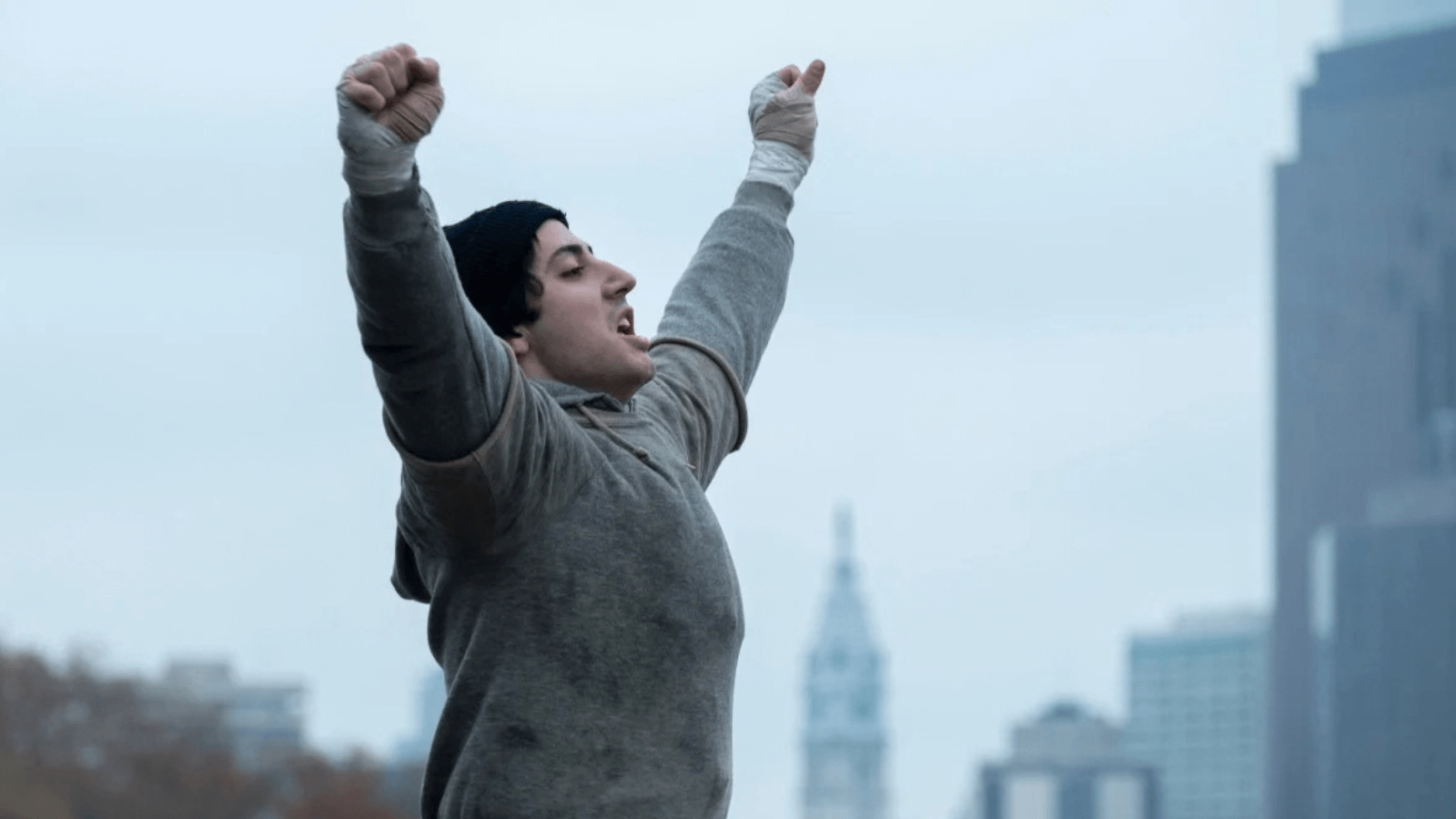
I Play Rocky, the new film from director Peter Farrelly (Green Book), tells the story of how Sylvester Stallone’s Rocky (1976) was made. It is a formulaic Hollywood crowd-pleaser that follows every beat you would expect from this kind of movie, especially if you are already familiar with Stallone’s biography or the production history of Rocky. As such, it features a large number of well-known anecdotes (as well as a few embellishments for dramatic effect), shameless nostalgia-baiting by recreating several scenes from the 1976 classic, and an underwritten female character whose sole purpose is to support the male lead (AnnaSophia Robb as Stallone’s first wife Sasha).
This generic approach with a strong focus on feel-good vibes has its limits, and I Play Rocky fails to generate much depth or personality. By way of example, the financial hardships Stallone experienced before Rocky was made are never truly felt. His titular insistence on playing the lead character, despite his dire financial situation and the studio offering him a hefty sum if a famous star were cast instead, is mostly played for laughs. It would, however, have offered the opportunity for a deeper exploration of what drove Stallone and the moral dilemma he faced given his responsibilities toward his family (his wife was pregnant at the time).
That said, the formula Farrelly uses also has its advantages, and there is a reason why it remains so popular. When it is well-executed, the result is often a highly entertaining and watchable film—which is exactly the case with I Play Rocky. Farrelly keeps things moving along at a fast clip and includes several funny moments. Some of the film’s biggest laughs come from a scene-stealing turn by Tracy Letts as a fictional studio executive who would feel right at home in the Apple TV comedy series The Studio. Meanwhile, relative newcomer Anthony Ippolito gives a strong lead performance, and his resemblance to a young Sylvester Stallone is uncanny.
As someone who generally dislikes this kind of movie and has never been the biggest fan of Rocky, I was actively trying to resist I Play Rocky. Nevertheless, it ultimately won me over despite its shortcomings. It is not high art, but Farrelly mostly succeeds in what he set out to do. The result is an entertaining film that should appeal to fans of Rocky above all, but also work for people who do not care about the 1976 classic. Whatever reservations I may have, I cannot deny that watching I Play Rocky with a packed and enthusiastic audience at the Kongresshaus—ZFF’s biggest venue, which has more than 1,500 seats—was a rousing and enjoyable experience. 3/4 Stars
NAZA
Special Screenings
Since its world premiere at the Venice Film Festival, the documentary NAZA has already been the subject of much debate, and it has received strong pushback from Israeli government officials. Prime Minister Benjamin Netanyahu even announced that he intends to seek legislative changes to revoke the citizenship of the film’s directors, Yuval Abraham and Rachel Szor—two Israeli investigative journalists and filmmakers who co-directed the excellent, Oscar-winning documentary No Other Land (2024) with their Palestinian colleagues Basel Adra and Hamdan Ballal.
NAZA builds on investigative journalism about Israel’s systematic mass killing of Palestinians that has been published in The Guardian, +972 Magazine, and Local Call since December 2023. The film mainly consists of filmed interviews with 24 Israeli intelligence officers and soldiers, whose appearances and voices were digitally altered to ensure they remain anonymous. What these interviewees talk about in the film is shocking—a staggering extent of mass surveillance of Palestinians, an AI system that identifies targets for strikes despite being prone to errors, and snipers killing innocent civilians stepping out of queues at food-distribution sites, to name just a few examples.
What comes across most strongly in NAZA is the complete, systematic dehumanization of Palestinians by the Israel Defense Forces (IDF), as well as the dehumanizing nature of modern warfare more generally. One interviewee even likens carrying out deadly strikes in Gaza remotely from his office in Israel to playing a video game. The film’s title also alludes to this dehumanization: NAZA is a military acronym derived from the Hebrew term Nezek Agavi, which means collateral damage—i.e., innocent civilians killed by an Israeli strike. According to the interviews shown in the film, 20 NAZA are generally considered acceptable by the IDF to hit their target, although one interviewee mentions that a strike with 500 NAZA was once approved to kill a single target.
As Israel’s genocide of Palestinians—a term used by one of the interviewees and also applied by an independent UN Commission of Inquiry—continues, having already resulted in more than 73,000 people being killed since the deadly Hamas attacks on October 7, 2023, NAZA is a vital and important documentary. That said, the film’s impact does not only derive from what it is about, but also from how well it is made—like No Other Land (which depicted the destruction of Masafer Yatta, a Palestinian community in the occupied West Bank, by Israeli forces), NAZA is a great piece of documentary filmmaking regardless of its content.
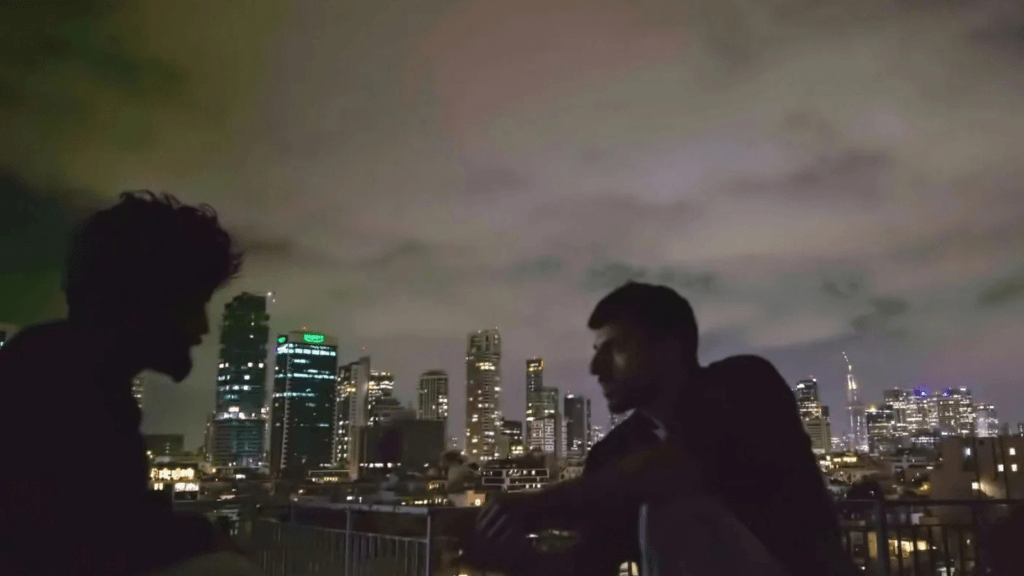
A film mainly consisting of interviews could easily feel dry or uncinematic, but Abraham and Szor’s approach ensures that this is never the case. The interviews were filmed on rooftops in Tel Aviv at night, and between interviews, there are eerie shots of the city in the dark, with the camera gliding over its skyline and peering into the lit apartments of its inhabitants. These shots not only offer the viewer a moment of respite but also open up a range of possible associations, with the city of Tel Aviv itself becoming a character. The voyeuristic shots through people’s apartment windows echo the mass surveillance of Palestinians described by the interviewees. Simultaneously, the glimpses into the everyday life of residents of Tel Aviv underscore the stark contrast to the destruction of Gaza described by the interviewees, which is happening only around 40 miles away along the same coast.
The audience also sees some of the residents of Tel Aviv watching the evening news, which creates another contrast—between what the Israeli mainstream media is reporting and what we hear from the interviews in the film. Additionally, due to the interviewees remaining anonymous, we only see them as dark silhouettes. While their reactions to what they reveal vary (some show remorse, while others compartmentalize or even boast about their actions), this means we cannot connect with them as individuals in the way we might if the interviews had been conventionally filmed. This was primarily done to protect the interviewees’ anonymity, but it also underscores the systematic nature of Israel’s mass killing, while simultaneously echoing the dehumanization of Palestinians.
Unlike the film’s detractors, Abraham and Szor choose a careful and restrained approach that avoids cheap polemics. They mostly let the sobering testimonies of their interviewees speak for themselves, although—in addition to the above-mentioned shots of Tel Aviv at night—there are a few brief instances where vital context is given through inserts. Among other things, there is archival footage that touches upon the history of Tel Aviv and the origins of the mass surveillance of Palestinians. There is also an excerpt of a TV interview in which a younger Netanyahu discusses his 1986 book Terrorism: How the West Can Win and gives a definition of terrorism that fits Israel’s current actions like a glove. Notably, NAZA does not include any footage of Gaza until the very end, which makes the effect of this footage all the more powerful and shattering.
NAZA is executive produced by Jonathan Glazer (whose 2023 film The Zone of Interest shares some thematic similarities with it) and deservedly won the Special Jury Prize at the Venice Film Festival. Following its current limited theatrical release, it will be made available to stream for free on the website of The Guardian in late November. It is by no means an easy watch, but it deserves to be seen by a wide audience—not only for offering vital and harrowing insight into Israel’s system of mass killing of Palestinians, but also for the exceptional filmmaking by Abraham and Szor. As far as I am concerned, NAZA is the best and most essential documentary of the year so far, and I doubt that it will be surpassed. 4/4 Stars
Fatherland
Gala Premieres
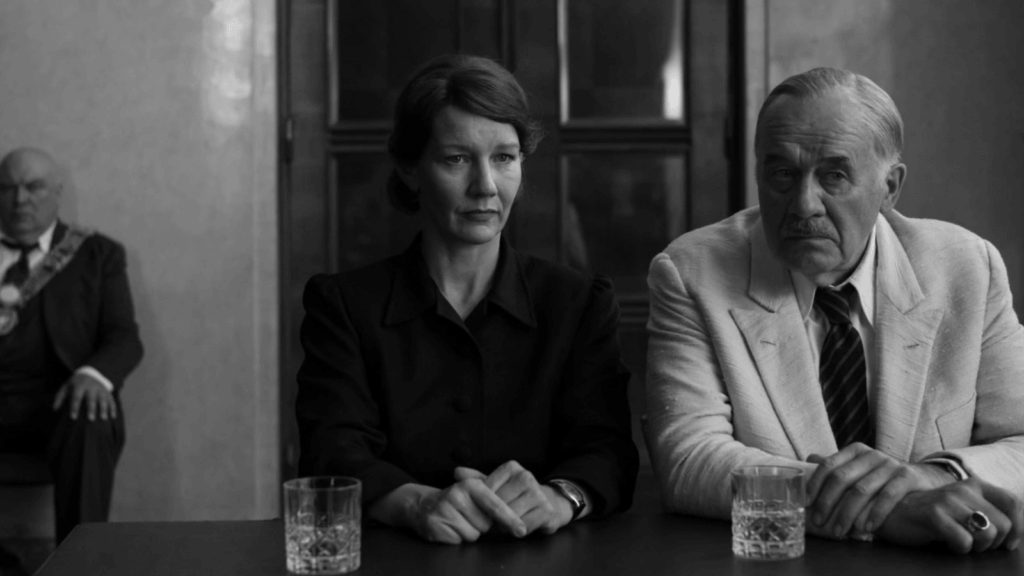
Fatherland is the new film by Polish filmmaker Paweł Pawlikowski. Thematically and stylistically, it feels of a piece with his two previous works, Ida (2013) and Cold War (2018). Once again shot in Academy ratio and black-and-white by cinematographer Łukasz Żal, the film follows famous German writer Thomas Mann (Hanns Zischler) on his trip to a divided Germany in 1949. Mann lived in the USA at the time after having left his home country when Adolf Hitler came to power.
The occasion of Mann’s trip is the 200th birthday of Johann Wolfgang von Goethe. As part of the celebrations, he is invited to Germany, where he meets various important people and gives speeches. After beginning his trip in Frankfurt in the West, Mann later travels to Weimar in the East, although he faces much criticism and even threats for his decision to do so. Accompanying him is his daughter Erika (Sandra Hüller, continuing her busy year after already starring in Project Hail Mary, Digger, and Rose). His disillusioned son Klaus (August Diehl), on the other hand, refuses to join the trip despite Erika asking him to do so. During Mann’s time in Germany, a family tragedy occurs that adds a deeply personal dimension to the political and intellectual high-wire act of his trip.
Pawlikowski’s main focus is not historical accuracy—in real life, Mann was accompanied to Germany by his wife Katia and not his daughter Erika, and the above-mentioned family tragedy occurred two months before Mann’s trip, rather than during it. The filmmaker is more interested in exploring the division of a country (mirrored by the division of Mann’s family), the meaning of home, the weight of guilt and historical trauma, as well as the (in)ability of artists and intellectuals to provide moral guidance in such politically fraught times. Despite Fatherland being fairly rooted in the time period it depicts (it even looks and feels like it could have been made in 1949), these are highly relevant themes for today—Germany is one of many countries currently experiencing strong societal division and the rise of a far-right party.
Despite a short runtime of 82 minutes, Pawlikowski manages to pack a lot of complexity and substance into Fatherland. Mann’s trip allows the filmmaker to depict the vast differences between the West and the East—or, as one character pointedly puts it in the film, between “Mickey Mouse and Stalin”—in a stark and thought-provoking manner. Moreover, the film’s various speeches and discussions prove intellectually stimulating. Fatherland also features striking and beautifully composed imagery thanks to Pawlikowski’s impressive formal control and Żal’s stunning cinematography, as well as great performances from the entire cast.
Given its many strengths, it is hard to find fault with Fatherland, but its austere formalism and overly intellectual nature result in a somewhat dry viewing experience that does not offer all that much narratively or emotionally. Like Ida and Cold War, it is a film that is easy to respect and admire, but difficult to love. Additionally, the similarities to Pawlikowski’s two previous films mean that the formal aspects no longer pack quite the same punch, regardless of how well-executed they are. Even so, Fatherland is a strong and worthwhile addition to Pawlikowski’s filmography that anyone who appreciates intellectual cinema and formal craftsmanship should watch. 3/4 Stars

David Hill is a lawyer from Switzerland. He has long had a passion for cinema, and he devotes most of his spare time to watching and researching films. His primary interest focuses on arthouse films, and he occasionally contributes to Deep Focus Review as a guest writer. Follow him on Letterboxd.
Thank You for Supporting Independent Film Criticism
If the work on DFR has added something meaningful to your love of movies, please consider supporting it.
Here are a few ways to show your support: make a one-time donation, join DFR’s Patreon for access to exclusive writing, or show your support in other ways.
Your contribution helps keep this site running independently. However you choose to support the site, please know that it’s appreciated.
Thank you for reading, and for making this work possible.
Brian Eggert | Critic, Founder
Deep Focus Review