Project Hail Mary
By Brian Eggert |
(Editor’s Note: This review was originally published on March 10, 2026. It has been reposted to coincide with its theatrical release on March 20. Also, the review discusses major plot points in Project Hail Mary. Read it after you see the movie to avoid spoilers.)
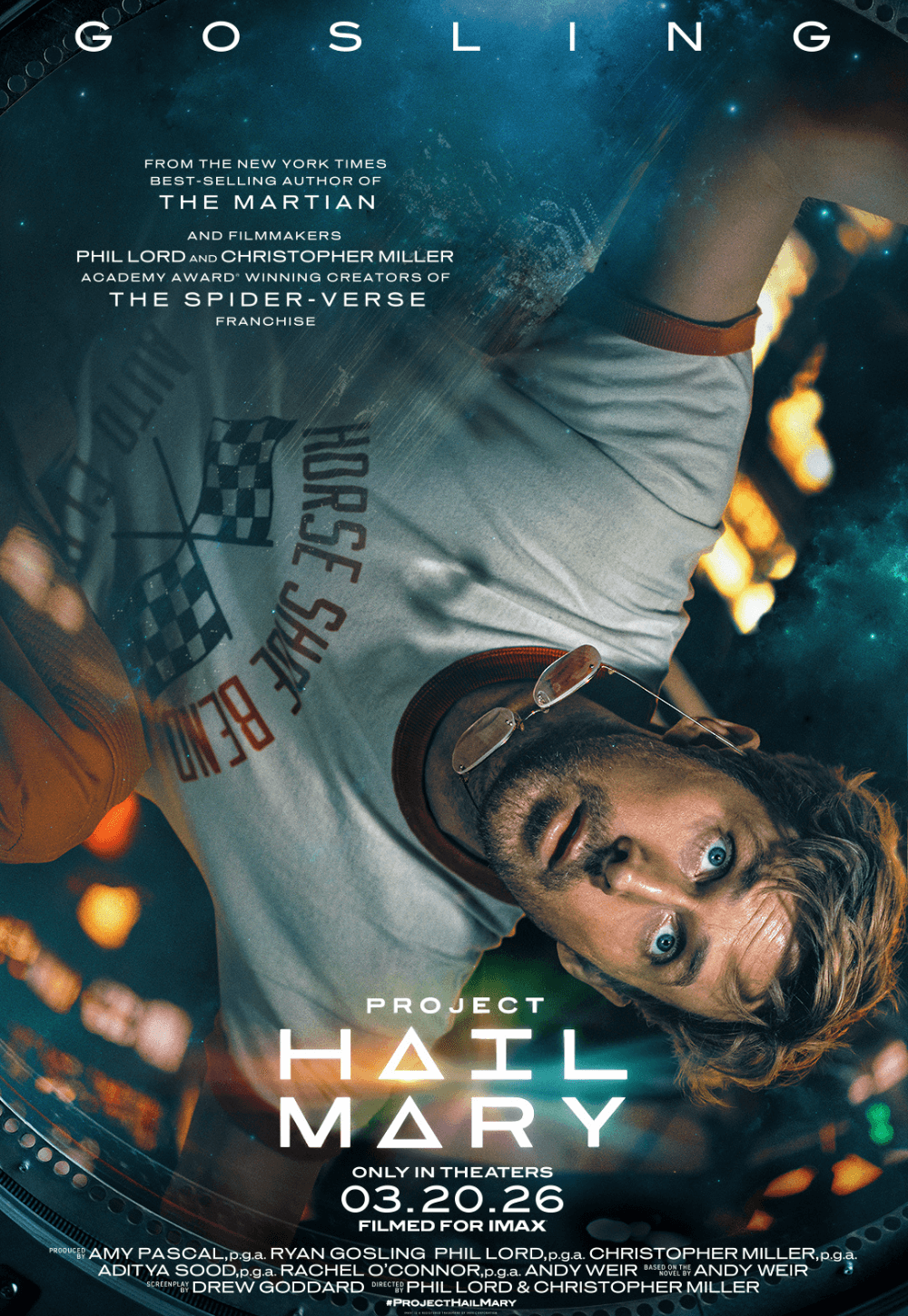
In its adaptation to the screen, Project Hail Mary has been modified to suit America’s culture of anti-intellectualism. Directed by Phil Lord and Chris Miller, the film takes Andy Weir’s excellent hard-science-fiction novel from 2021 and jettisons the science, focusing instead on the material’s blockbuster potential: its sense of humor and spectacle. The book’s familiar blend of wit and irony serves as a counterbalance to its entrenched, mostly accurate exploration of scientific problem solving—the same formula that made Weir’s earlier book, The Martian, into a terrific movie. In Lord and Miller’s hands, however, that balance from the page has been replaced with goofball antics and lowest-common-denominator escapism. The big-screen version caters to America’s dumbification, which devalues expertise and scientific evidence. The film doesn’t trust its audience to follow passages of scientific inquiry and reasoning. And so, star Ryan Gosling spends much of the movie in charmer mode rather than science-guy mode, while the directors rely on his charisma and the production’s reportedly $200 million price tag to deliver an oversimplified save-the-world scenario. Project Hail Mary may be good enough to keep moviegoers diverted for two-and-a-half hours, but it’s a bad adaptation of Weir’s book.
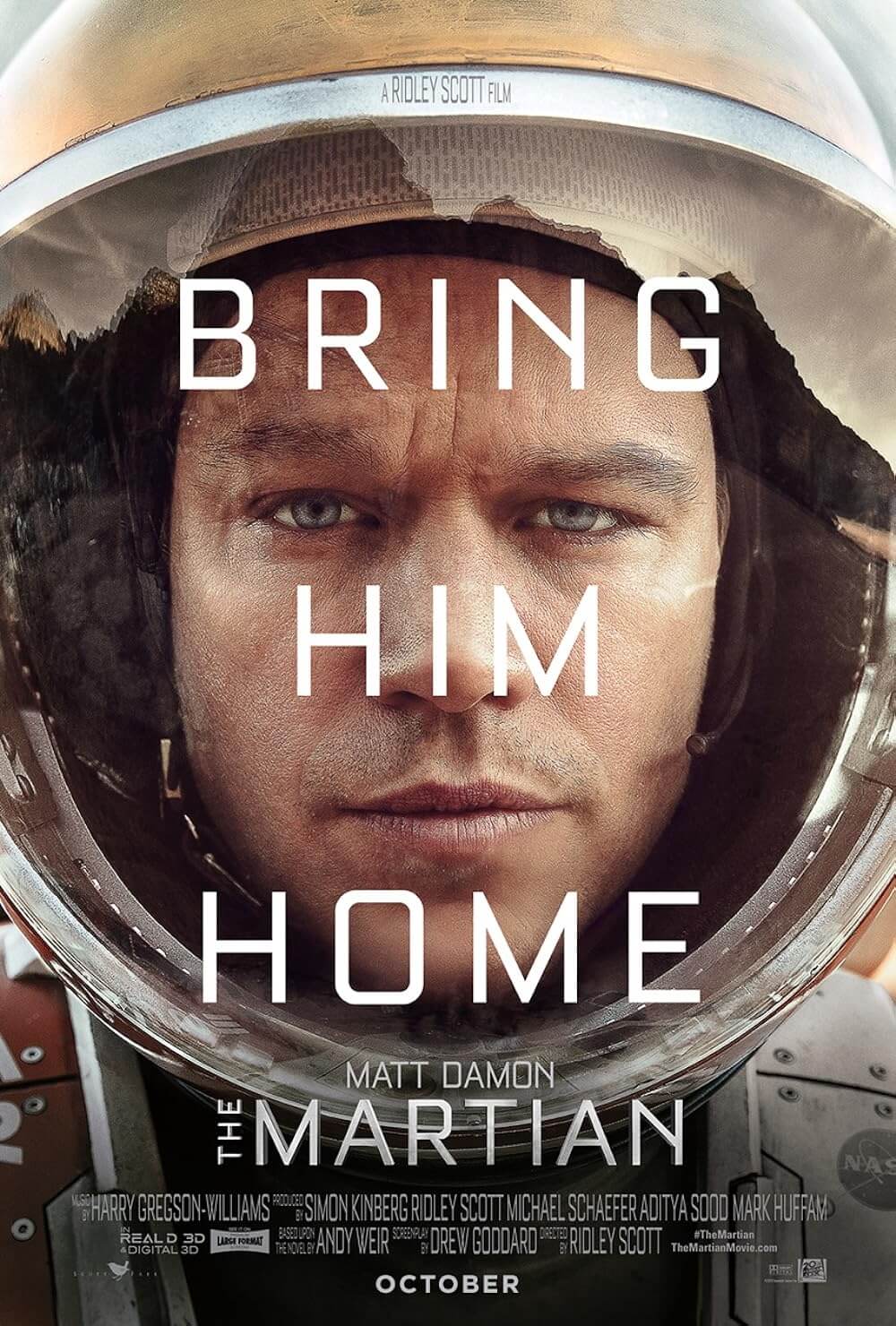
Comparing a movie to the book is almost always a losing exercise. It seldom results in a fair appraisal of either as individual works, and as a general rule, I try to avoid it. Yet, the deviations in this Amazon MGM Studios production signal a broader set of ideological disparities between the book and the movie. The filmmakers seem to have come away from Weir’s novel with little appreciation of its textures and application of the scientific method, seeing only the general shape of a blockbuster movie with several exciting sequences and a friendly alien. It’s not so surprising that Lord and Miller, helmers of 21 Jump Street (2012) and The LEGO Movie (2014), took a crowd-pleasing approach to their adaptation. But after Drew Goddard penned the screenplay for The Martian (2015), and so thoughtfully maintained its largely authentic portrayals of space travel and survival on another planet, while also making them accessible, his efforts on Project Hail Mary feel trivial and shallow.
For the uninitiated, the story follows Dr. Ryland Grace, played by Gosling in the film, who wakes up with amnesia on a spaceship eleven light-years from Earth, with no idea who he is or what he’s doing there. The two other members of his crew died sometime on the journey, so he’s alone. Apparently, he’s a scientist of some sort, though he doesn’t know why he knows what he knows. Gradually, he explores his resources, such as food that seems nonsensically limited to dried ramen noodles and mustard (ignoring the ship’s more appetizing culinary offerings, such as breakfast burritos, explored in the book). His curiosity ultimately prompts the intermittent recall of his past and his reasons for being there. Ryland soon remembers he has a doctorate in molecular biology and has given up academia to become a junior high science teacher. Eva Stratt (Sandra Hüller), the head of an international coalition of governments, enlisted his help to save the solar system’s dying Sun. A cellular lifeform dubbed Astrophage has started to eat our star, which, over the next few decades, will dim enough so that almost no life on Earth will be able to survive. The questions about Ryland’s mission and why he was chosen are answered in due time, and it turns out he’s the world’s only hope.
Goddard’s screenplay is driven by emotion first, as opposed to how Weir allows scientific reasoning to facilitate emotional breakthroughs. For instance, the movie rushes to introduce the alien whom Ryland names Rocky (voiced and puppeteered by James Ortiz), because he looks like a group of living stones. Like Ryland, Rocky belongs to a species that has traveled many years to the Tau Ceti star, the only local solar system unaffected by Astrophage, and his crew has also died for tragic reasons (once again, downplayed). Rocky belongs to a system called Eridia, and his star is also dying. The two must pool their resources and knowledge to figure out why the Astrophage has not affected Tau Ceti and then send that information home. For Rocky, an Eridian with a centuries-long lifespan, the trip is long and lonely but doable. For Ryland, it’s a suicide mission; his Astrophage-powered shuttle only has enough fuel for a one-way trip. But the film values Ryland’s bravery more than, say, his ability to figure out how to communicate with an alien who speaks only in tones—a process that unfolds gradually in the book but is rushed through in the movie.
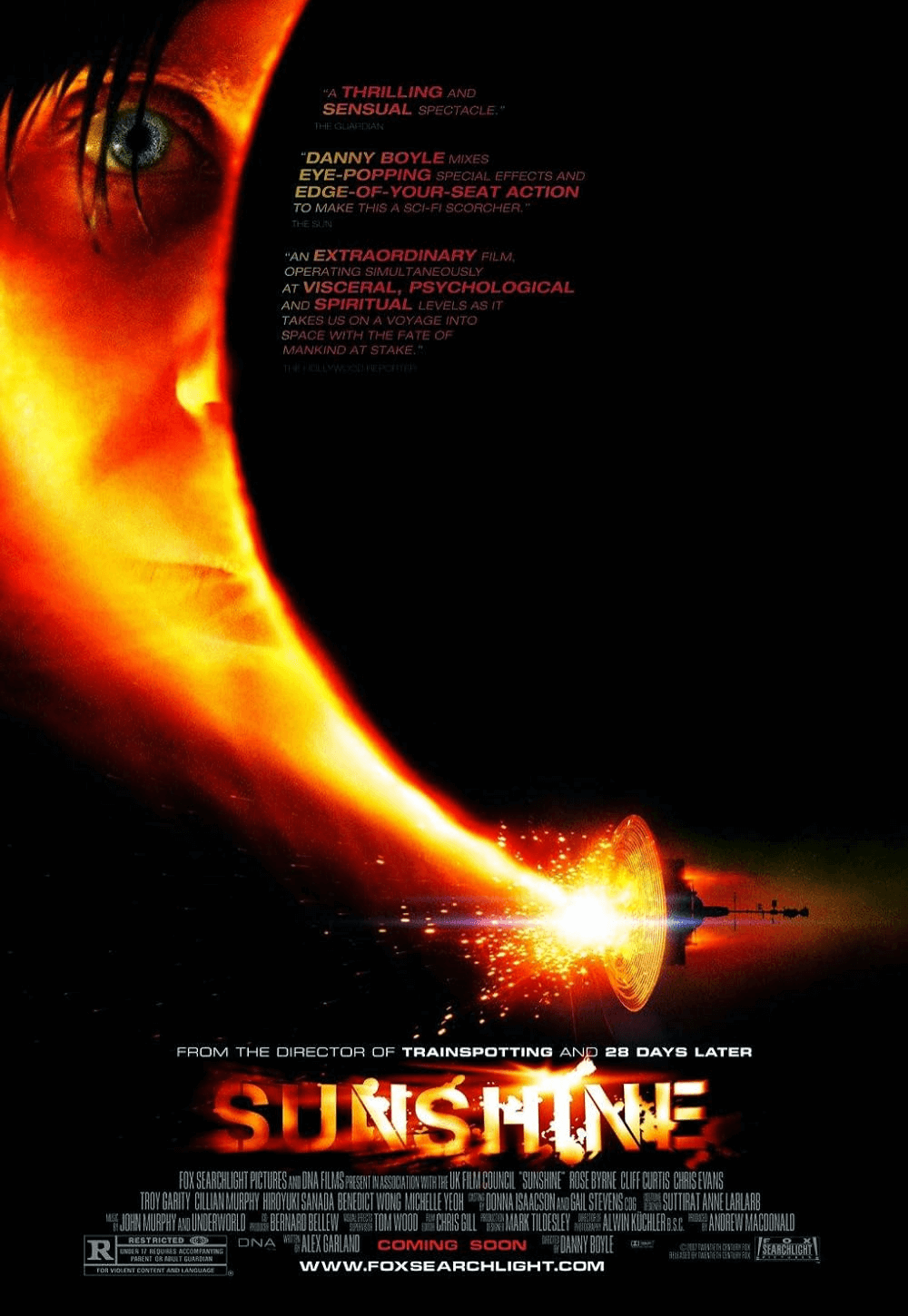
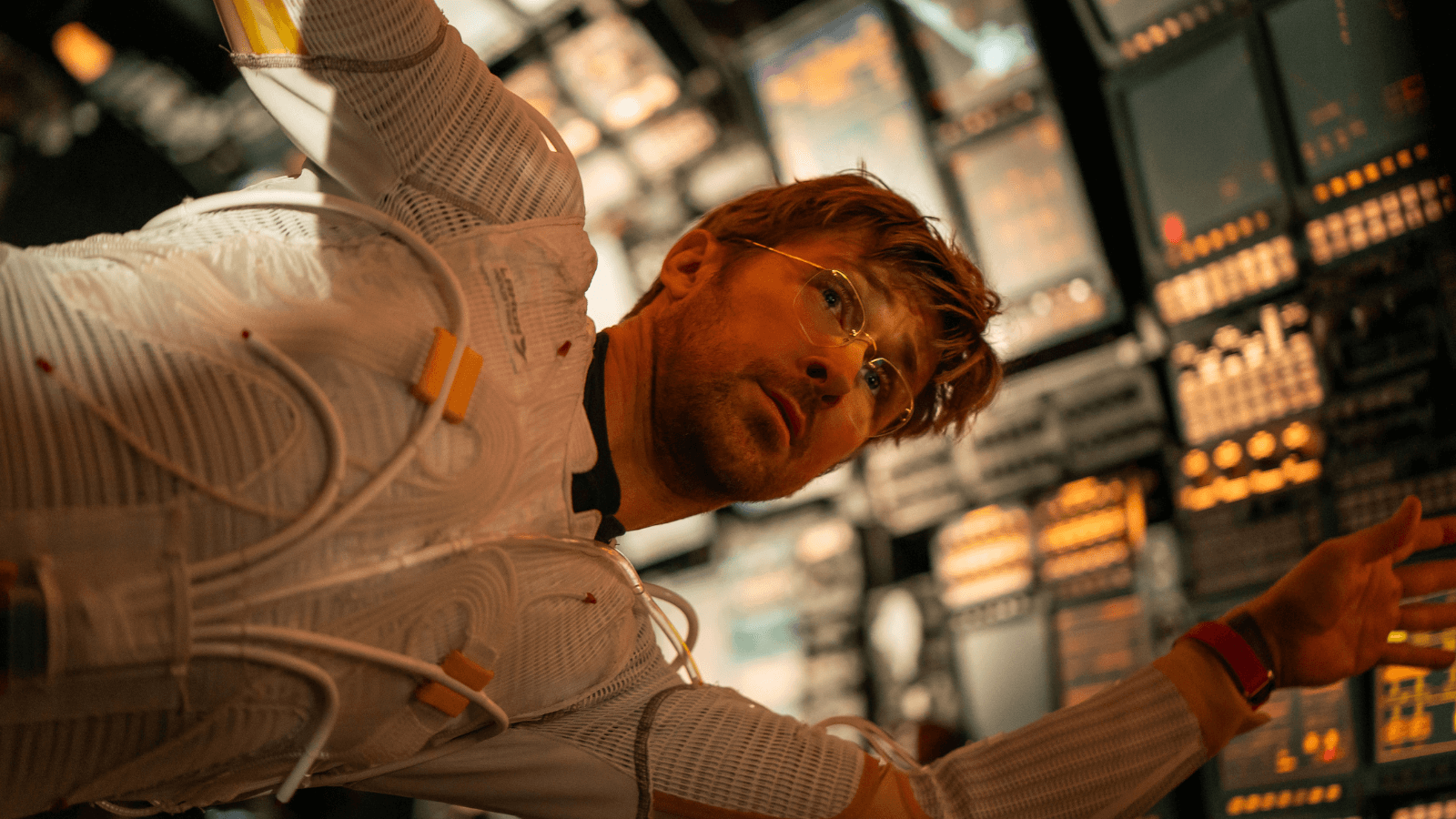
By de-emphasizing science, the movie eliminates not only some of the book’s most joyful moments that are rooted in scientific discovery, but also the many scenes that depict collaboration as a path to progress and friendship. Part of Ryland and Rocky’s working relationship is that they each have specific knowledge, and only by working together do they solve problems through their combined intellect. After reading the book, I may not have had a thorough understanding of molecular biology, chemistry, and astrophysics, but I understood the concepts because Weir explained them well enough for a layperson to grasp. In the film, these details have been replaced with humor—not so much jokes as sarcastic quips, like how Marvel movies rely on banter and one-liners. Project Hail Mary’s humor consists of Gosling acting silly, stumbling through zero gravity and making pratfalls. Similarly, lighthearted montages provide a shorthand way to establish Ryland’s bond with Rocky in a virtual reality room—a detail not in the book but reminiscent of a room in Danny Boyle’s Sunshine (2007), another movie about a mission to save the Sun.
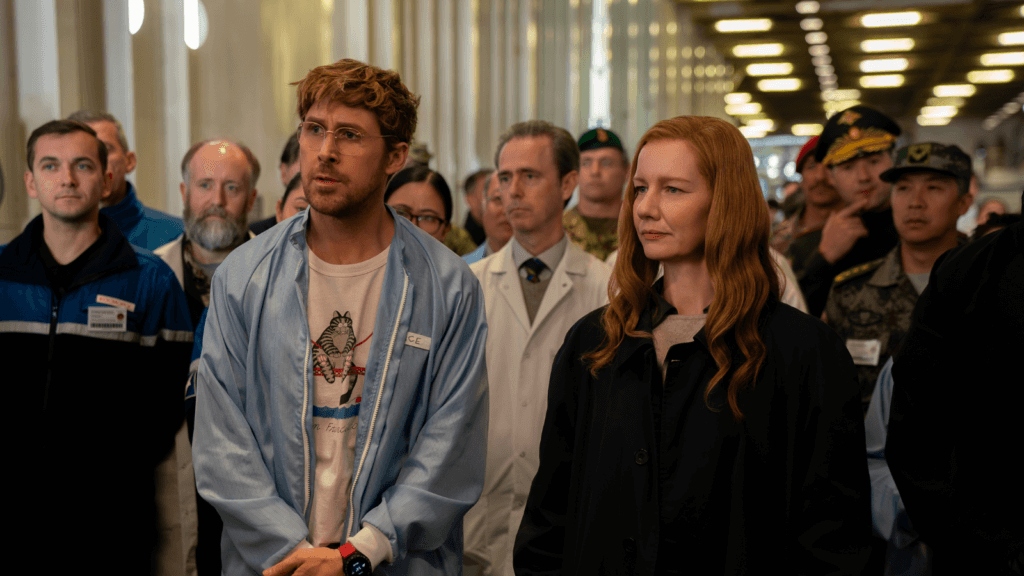
One of the aspects I loved about The Martian is the matter-of-fact way it depicts a world that has faith in science, with world governments that work together on an international scale to advance humanity through space exploration. Indeed, perhaps worst of all, Lord and Miller’s version of Weir’s third book minimizes how scientists from every country set aside their differences and invest everything to save the Sun. In the Earth flashback scenes, there’s hardly a mention of Stratt’s all-powerful oversight of the project, allowing her to access no limit of human and financial resources. And her pragmatic, no-nonsense demeanor has a vaguely flirty quality in Lord and Miller’s hands, while her absolute power over an international coalition is barely mentioned or demonstrated. Instead of building a complex, potentially unlikable character out of Stratt, she comes across as an underdeveloped nonentity with a secret heart of gold. The filmmakers spend more time on a likable security agent named Carl (Lionel Boyce), who helps Ryland solve some problems. In another throwaway sequence, Ryland and Carl bond in a hardware store shopping montage, giving way to product placements for Skittles and Reynolds Wrap.

Moreover, the filmmakers ignore Weir’s secular, agnostic, even atheist perspective in the book by introducing questions of faith. In an awkward scene, Ryland asks Stratt if she believes in God. She says yes. Later, a Jesus-y song plays over the end credits. These are additions by the filmmakers, which, along with the deprioritization of science, reflect America’s swing toward religion and feelings over facts. It’s as though they associated the title with the Catholic prayer more than its intended meaning as a desperate, last-ditch effort. Still, while it’s certainly the filmmakers’ prerogative to alter the material to fit their needs and vision, the choice feels rather inappropriate given that so much of Weir’s text celebrates the teamwork of scientists around the globe and the galaxy, not religious mysticism. In the end, the book’s resolution that Ryland will stay behind to teach young Eridians rather than return home has been replaced with uncertainty about whether he will return. It’s a choice that stresses feelings of home, even if there’s no one in particular waiting for him, over how Weir prioritizes the rewarding nobility of teaching science to others.
On purely formal terms, the movie looks top-notch, with impressive production design on both Ryland and Rocky’s ships—a functional, NASA-style layout in the former, and a flinty, jagged geological vessel for the latter. Cinematographer Greig Fraser, who shot Denis Villeneuve’s Dune movies, offers a textured presentation that, depending on the theater, switches aspect ratios due to the intermittent use of IMAX cameras. The practical Rocky puppet receives the occasional boost from CGI, particularly for his eco-location vision and quicker movements. The outer-space scenes featuring shuttles and alien lifeforms are rendered with serviceable VFX. Elsewhere, the music presents an odd imbalance of Daniel Pemberton’s lofty, choral-infused score and predictable needle drops. And the story structure employed by Goddard, the directors, and editor Joel Negron resists Weir’s logic, in which Ryland’s scientific conundrums in the present lead to his recovery of vital memories from his past that will unlock the answer to a problem. The movie also mostly underplays how, after Ryland wakes up with amnesia, he must gradually regain his memory over several weeks.
Project Hail Mary is one of those movies that came apart for me on the drive home. During the movie’s runtime, which races by, I was pleasantly, mindlessly diverted—enough so that, for a few minutes afterward, I almost convinced myself it was good. And maybe it is. Those unfamiliar with the book won’t recognize this adaptation’s flaws and enjoy the movie for its clownish energy. Maybe my approach to this review is unfair. But all I can do is review the movie that I saw through the contexts I have available to me, and in those terms, Lord and Miller have done Weir’s novel a disservice and talked down to their audience. The movie betrays the book’s spirit by supplanting Weir’s interest in the scientific process, secularism, and international collaboration with populist entertainment. The result is not just a weak adaptation but also a chilling reflection of American culture’s increasing devaluation of science and reason. And while the movie’s value systems of family, humor, faith, and home are not without merit, they’re not the book’s primary values. Maybe that distinction won’t matter to you. It mattered to me.
Thank You for Supporting Independent Film Criticism
If the work on DFR has added something meaningful to your love of movies, please consider supporting it.
Here are a few ways to show your support: make a one-time donation, join DFR’s Patreon for access to exclusive writing, or show your support in other ways.
Your contribution helps keep this site running independently. However you choose to support the site, please know that it’s appreciated.
Thank you for reading, and for making this work possible.
Brian Eggert | Critic, Founder
Deep Focus Review