Reader's Choice
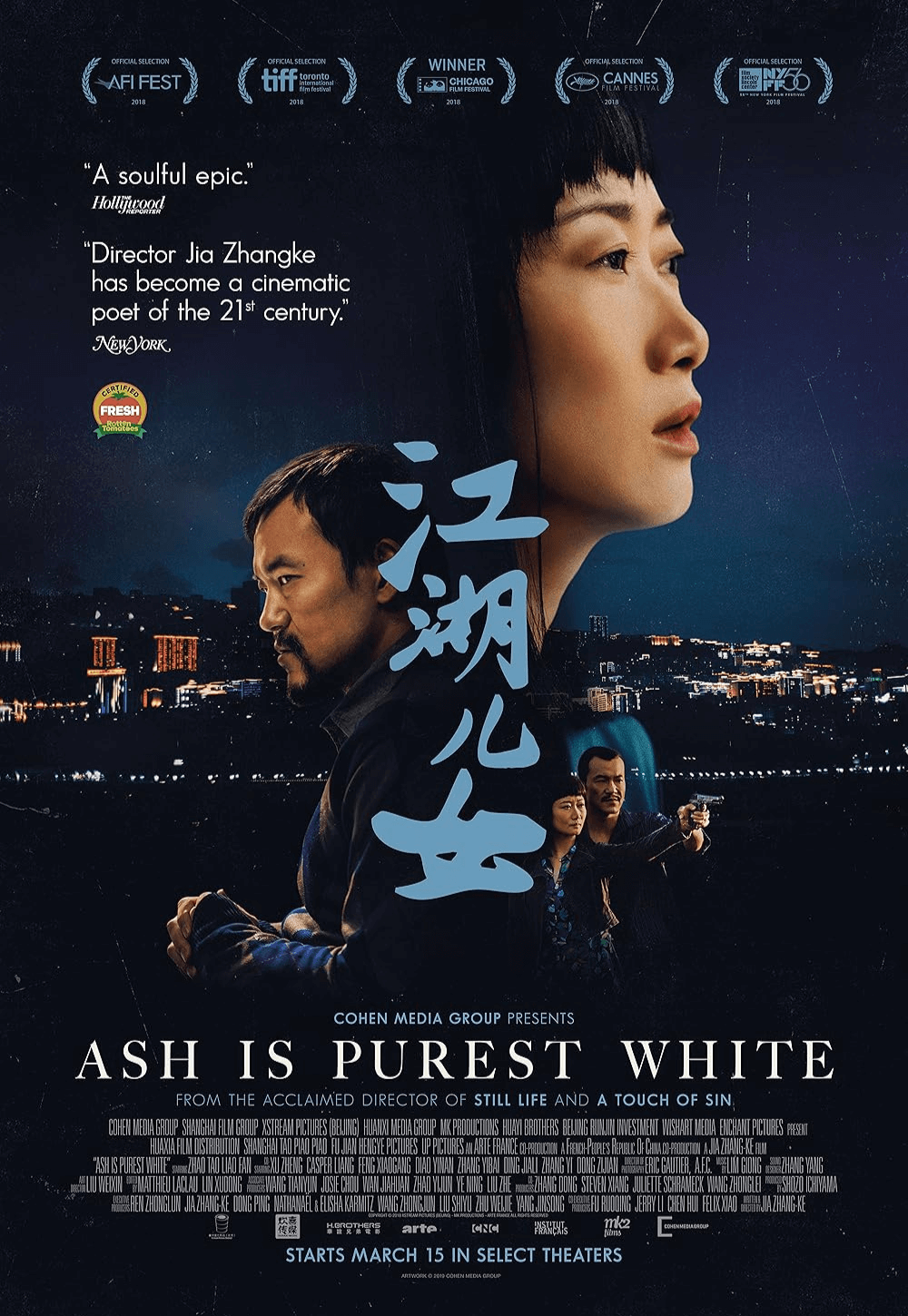
Ash Is Purest White
By Brian Eggert |
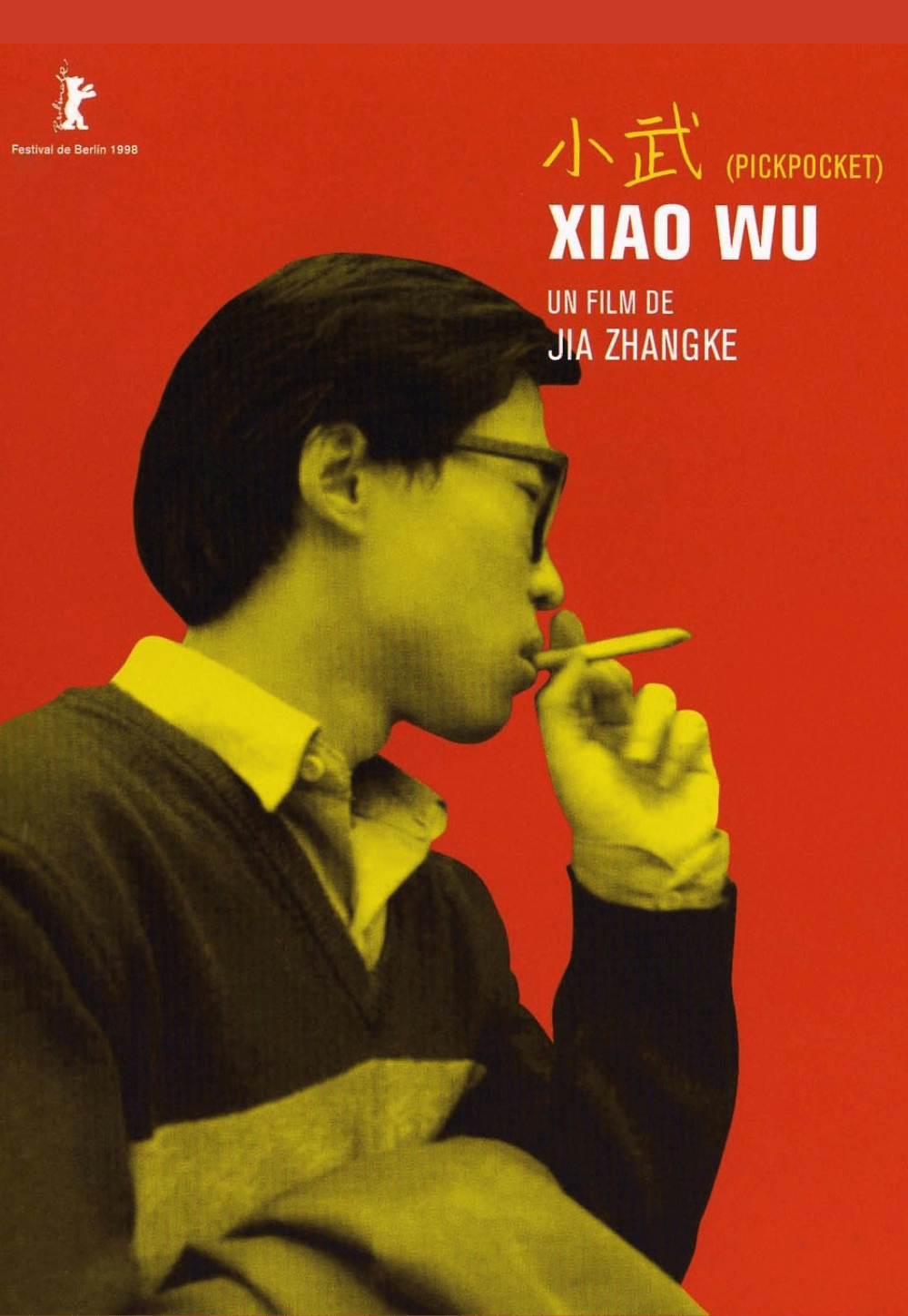
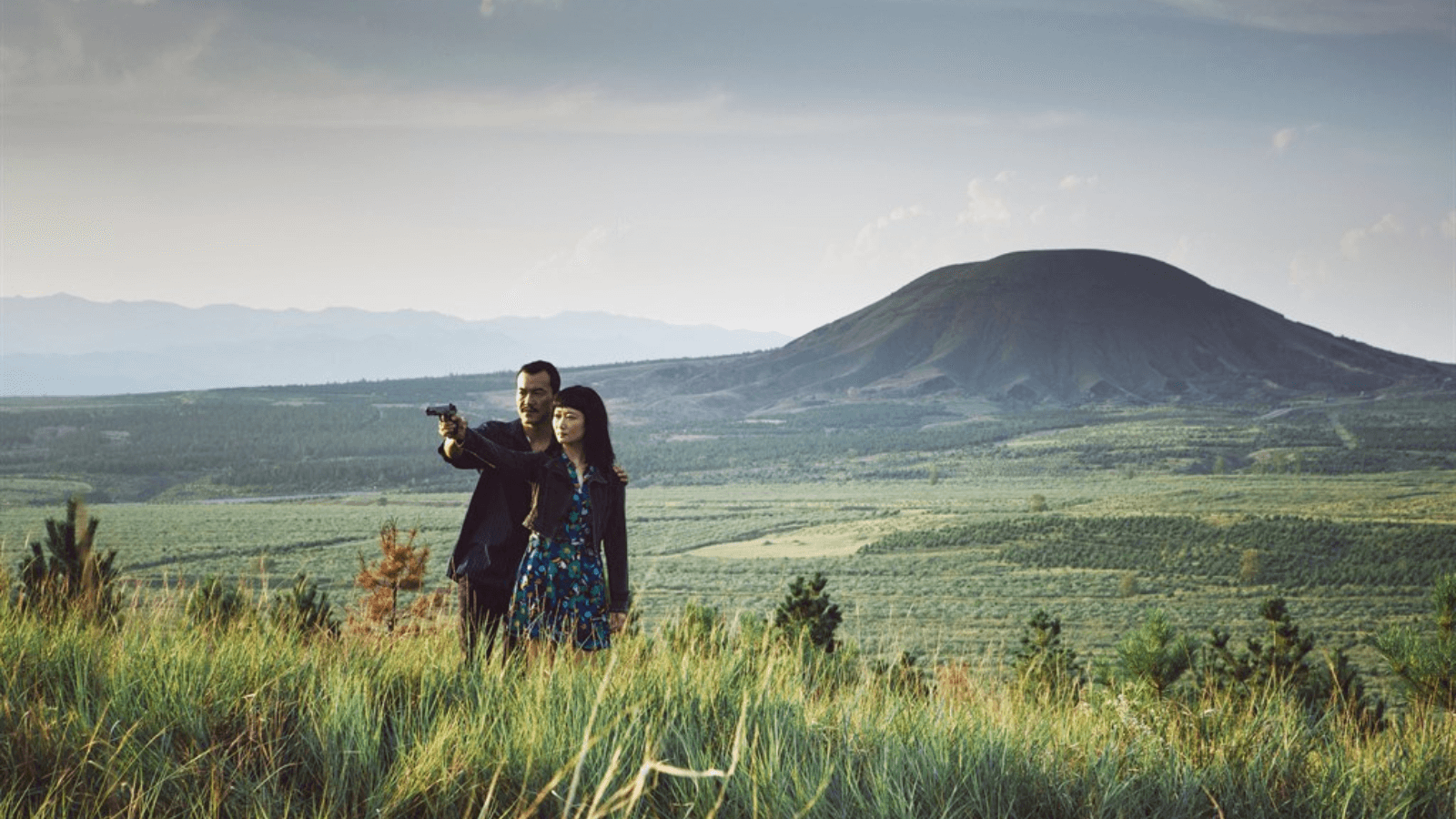
Jia Zhangke’s Ash Is Purest White has been described as a remix and a greatest hits compilation of themes from throughout his career. Musical symbolism aside, the 2018 film incorporates motifs explored in his earlier features, from the documentary footage blended with a fictional narrative that pervades most of Jia’s work to his interest in China’s crackdown on criminal behavior (see Xiao Wu, 1997). There’s even a familiar appearance by a UFO, recalling a brief scene in Still Life (2006). But rather than mere variations on established preoccupations, China’s most incisive documenter of the country’s social and economic development into a globalized power streamlines his ideas for perhaps his most effective mixture of narrative thrust and national commentary. The Sixth Generation filmmaker once again uses the pretense of a genre, namely the gangster saga or jianghu, to access and disguise his observations about the increasingly draconian and repressive Chinese state. As a result, Ash Is Purest White remains one of Jia’s most accessible and discerning films.
The story takes place in what the characters call the jianghu underworld in Datong. A term dating back to classical Chinese literature, jianghu is a multivalent word that literally means “rivers and lakes.” Although the word can refer to the entire world, it’s more commonly associated with an elaborate cross-section of genre fiction involving crime and martial arts, the stuff of lawless swordsmen and wandering fighters who often appear in wuxia films, such as King Hu’s A Touch of Zen (1971). In Jia’s hands, the word becomes a specific reference to a criminal underworld inhabited by the main characters, Bin (Liao Fan), the second most powerful gangster in their Shanxi Province city, and his loyal girlfriend, Qiao (Zhao Tao). Jianghu eventually becomes an indicator of the past, as the criminal lifestyle proves untenable for both Bin and Qiao after the former loses his power and the latter does a five-year prison term for him.
The film opens with documentary footage Jia shot in 2001, presented in a boxy ratio, of a child sleeping on a bus. Jia often weaves archival footage into his fictional features, reminding his audience of the interplay between reality and fiction, the real world and his cinema’s commentary on it. The footage also reminds us that Jia sets Ash Is Purest White around his birthplace in Shanxi province. There, Bin runs some minor criminal operations, including a gambling den and nightclub, which Qiao helps oversee. Although they’re both committed to their future, Qiao has connections to the past: her father, a mineworker, lives in a small town nearby, and she visits him regularly. She also disapproves of Bin falling too deeply into the jianghu lifestyle, evidenced by her disapproval of Bin’s pistol and the suggestion that they marry and move away. When a rival gang kills Datong’s top crime boss, Brother Eryong (Diao Yinan)—who comically remarks at one point, “There are only two things I care about: animal documentaries and ballroom dancing”—those gangs then target Bin.
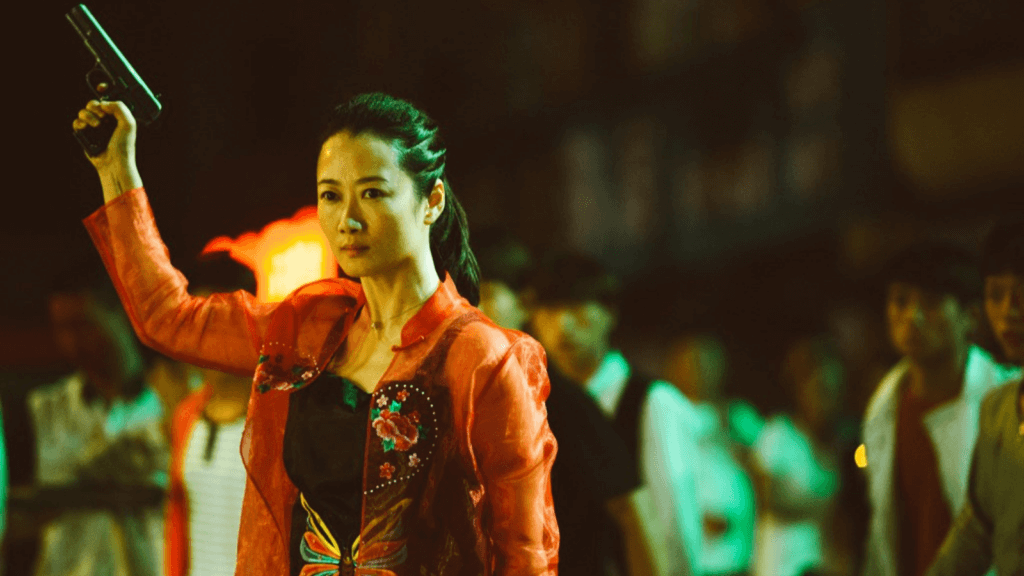
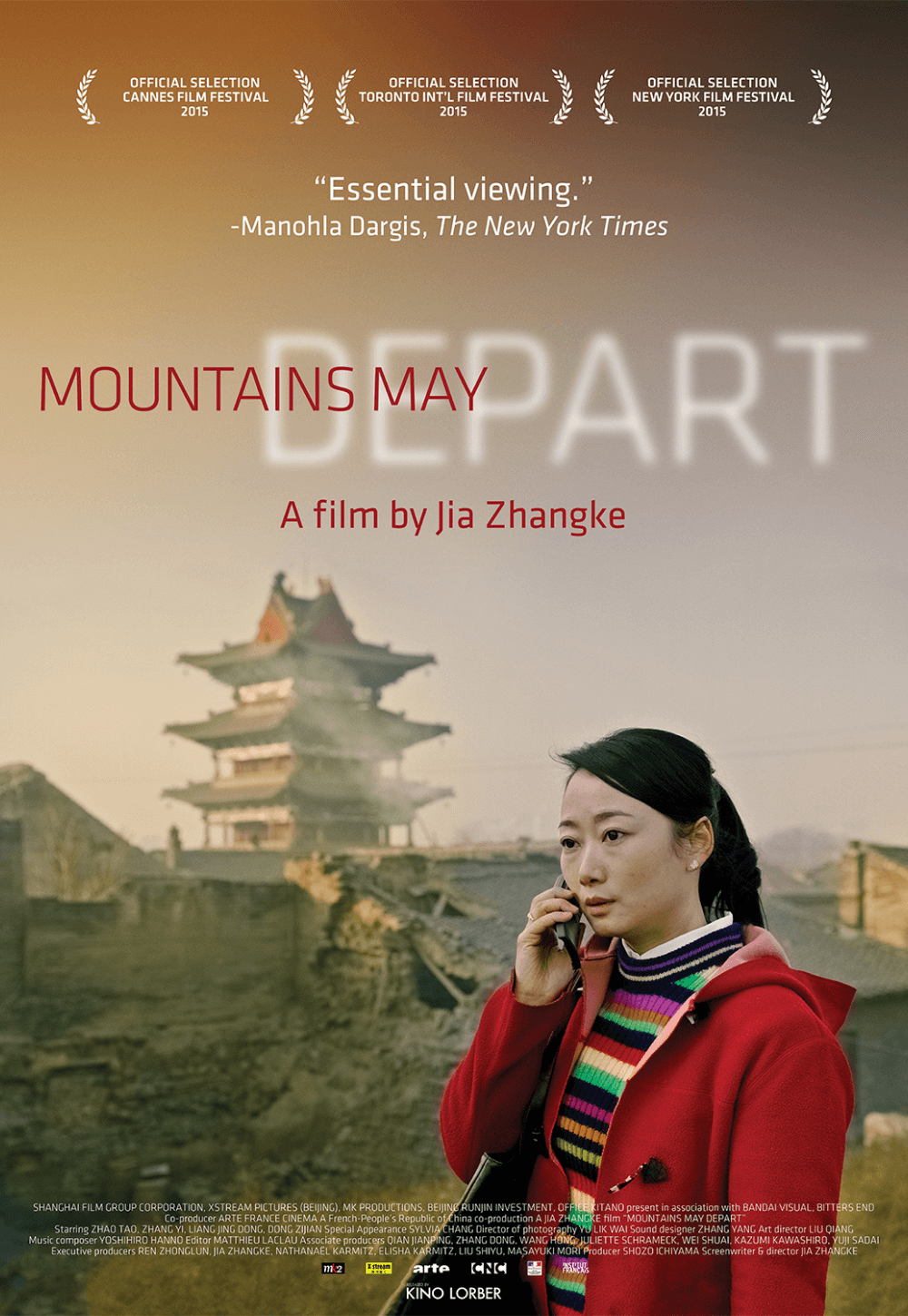
Soon, young motorcycle punks corner Bin, and though he puts up a good fight, they beat him with helmets and shovels. Only then does Qiao emerge, having learned from Bin how to shoot, and fires two warning shots in the air to disperse the attackers. Defending Bin lands her in prison for possession of an illegal firearm, after which she emerges alone in the world. Although Bin never visited her, she’s determined to find him and reconnect. After the gangster-centric first act that recalls Xiao Wu, the second act brings to mind Jia’s Still Life in its docu-drama portrait of searching for someone in a modernized world. Qiao wanders in a radically changed environment. Nothing looks or feels familiar, though Jia avoids resorting to the speculative futuristic details he explored in Mountains May Depart (2015). Ash Is Purest White remains grounded in reality, such as detailing how a whole city has been abandoned while Qiao was away, soon to be submerged with the construction of the Three Gorges Dam, a massive hydroelectric dam built on the Yangtze River in China.
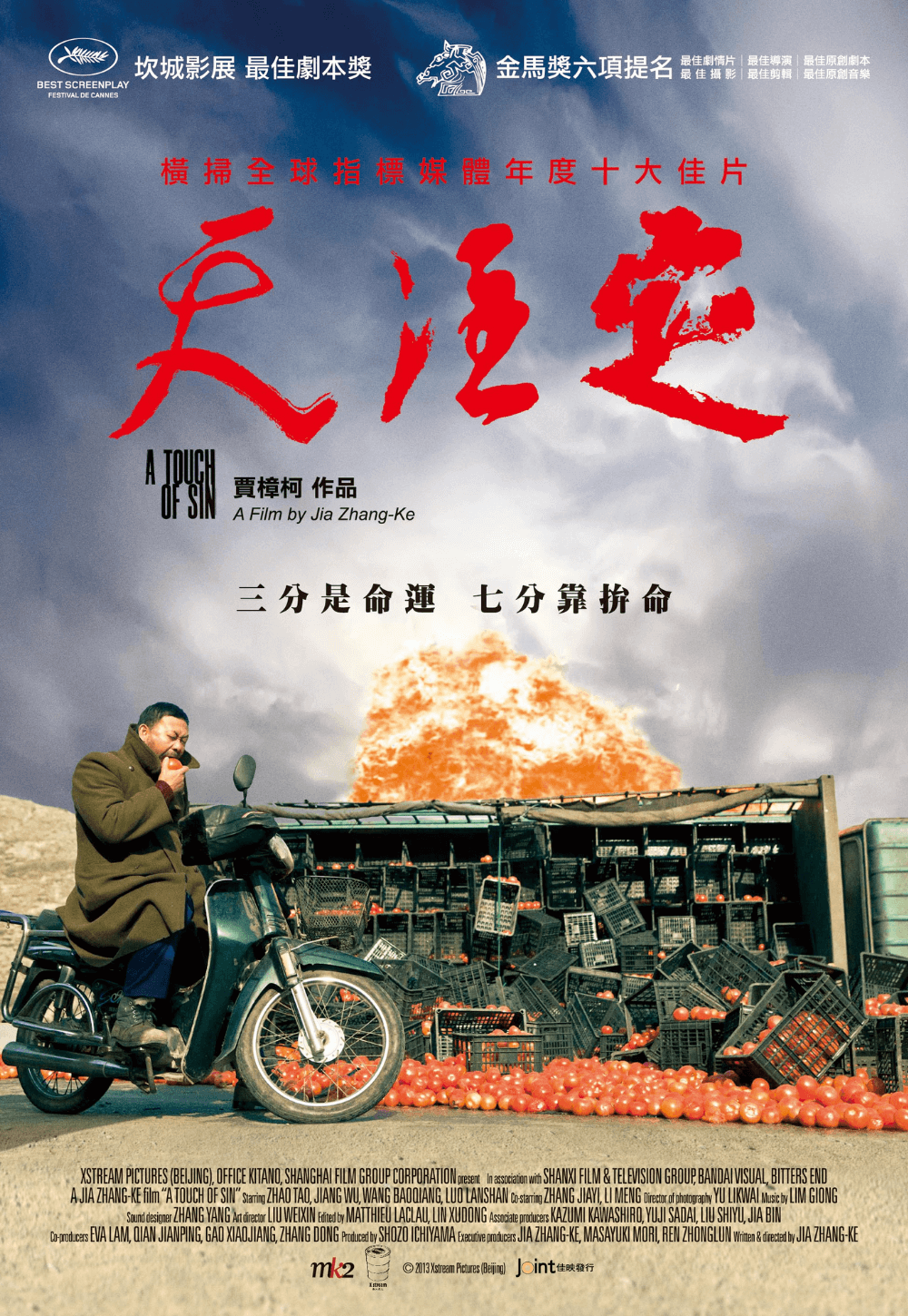
In the second act, Zhao, Jia’s wife and muse, shines as Qiao, now penniless, struggles to navigate the modern world. While she argues earlier in the film to Bin that the jianghu lifestyle no longer exists, she inhabits this world after prison. A woman pickpocket steals her ID and money, prompting a desperate search. Qiao then pretends to be a bride’s friend to secure a free meal at a wedding feast. Another con finds her spinning an elaborate yarn about an affair and a miscarriage, earning her a wad of cash as a payoff. This series of petty cons and close encounters conveys a desperate dynamic between the haves and have-nots, those who have thrived in China’s adoption of a capitalistic system and those who remain outsiders, resorting to crime to survive—evoking a similar idea in Jia’s A Touch of Sin (2013). As Bin observes later, “We’re all prisoners of the universe.”
If this sounds like a cynical worldview, Jia doesn’t deny such a perspective. “Pessimism will give us a pragmatic spirit,” wrote the director. “It is our approach to freedom.” Scholar Zhu Xuefeng notes that Daoist philosopher Zhuangzi has described jianghu as a method of understanding that moral judgments are irrelevant compared to transforming with the Dao, or the “Way.” This means living naturally and adapting as life changes, without focusing on social constructs such as moral imperatives and ideals, but instead developing an inner harmony. In other words, the world will not do you any favors; happiness comes from within. It is both a grim commentary on the innate unfairness of the world and a freeing acceptance of its unreliable nature. For people like Qiao, it might also be a way of justifying her choices. What other options does she have?
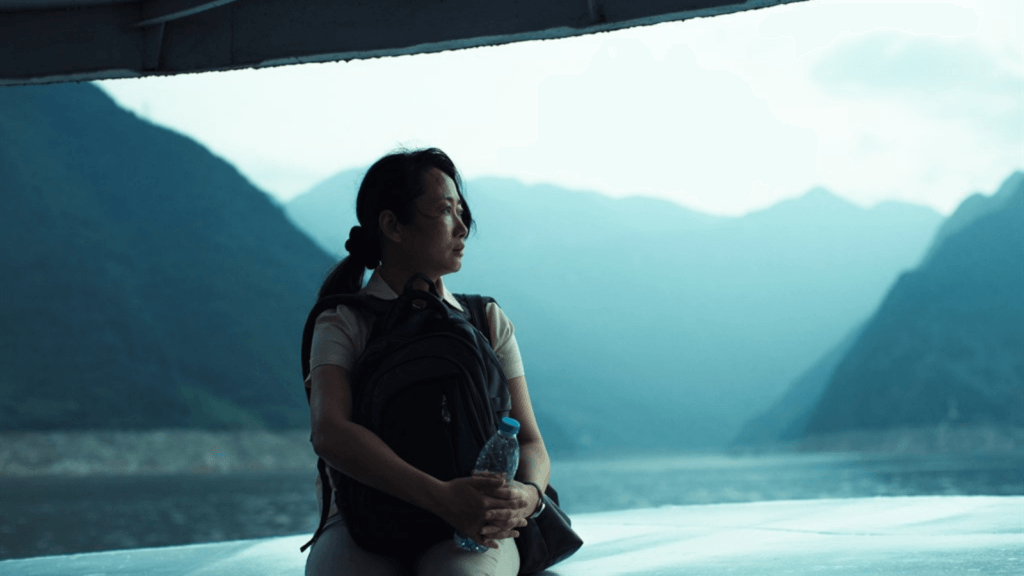
Most clever is Jia’s casting of other independent Chinese filmmakers in small roles throughout Ash Is Purest White, including Diao Yinan (Night Train, 2007), Feng Xiaogang (Assembly, 2008), and Zhang Yibai (The Longest Night in Shanghai, 2007). Many of their films have either not been granted a release in mainland China or have undergone censorship. Jia’s inclusion of these directors underscores the dwindling presence of independent cinema in China, where the state disapproves of dissenting voices. These directors play jianghu criminals because their country has either banned or redacted their films, making them artistic outlaws in a sense. In the final scenes in 2017, Qiao reunites with Bin, who now uses a wheelchair after a stroke, in Datong. Surly and self-pitying, Bin eventually receives therapy and walks again, but without warning, he leaves Qiao, who runs a new gambling den.
In a film marked by Jia and cinematographer Éric Gautier’s shifting aspect ratios and formal bravura, the final shot from Qiao’s newly installed surveillance cameras spies her weighing Bin’s departure. The image suggests that the future of cinema exists under observation by the Chinese state, marking an end to the jianghu lifestyle portrayed in the film and symbolized by Jia’s fellow filmmakers. Not long before Ash Is Purest White’s release, President Xi Jinping put the Chinese film industry under the control of the Publicity Department of the Chinese Communist Party (aka Propaganda Department), meaning any dissent from artistic voices is shut down by the Communist government. The film’s narrative trajectory goes from a place of relative freedom in Bin and Qiao’s criminal heyday in 2001—epitomized by a memorably boisterous dance to “YMCA” at the club—to a somber and divided enterprise.
Jia’s take on the crime saga, like The Godfather (1972) or similar epics that span decades, relies less on docu-style footage and observation than his earlier features. Ash Is Purest White follows the recent trend in Jia’s A Touch of Sin and Mountains May Depart by adopting a genre and moving away from the Sixth Generation’s characteristic mode of independent, realistic cinema, partly because the state no longer allows for realism. “Jia’s cinematic world is becoming ever more fictionalized because the real world itself seems to be disappearing in the age of Internet and information,” writes Zhu. When Qiao observes that volcano ash is purified by burning so hot, Jia seems to remark that a similar artistic purity derives from unfiltered and uncensored expression or, in Qiao’s world, from inhabiting the jianghu lifestyle. Ash Is Purest White mourns that such purity may be impossible for Jia or his fellow filmmakers.
(Note: This review was originally posted to DFR’s Patreon on March 31, 2025.)
Bibliography:
Frodon, Jean-Michel. The World of Jia Zhangke. Film Desk Books, 2021.
Jia Zhangke. Jia Zhangke Speaks Out: The Chinese Director’s Texts on Film. Bridge21 Publications, 2015.
Mello, Cecília. The Cinema of Jia Zhangke: Realism and Memory in Chinese Film. I.B. Tauris & Co Ltd, 2019.
Xuefeng, Zhu. “World Building across Media and the Problem of Authorship in Ash Is Purest White.” Literature/Film Quarterly, vol. 49, no. 3, 2021. JSTOR, https://www.jstor.org/stable/48678591. Accessed 28 March 2025.
Xiaoping, Wang. China in the Age of Global Capitalism: Jia Zhangke’s Filmic World. Routledge; 1st edition, 2019.
Thank You for Supporting Independent Film Criticism
If the work on DFR has added something meaningful to your love of movies, please consider supporting it.
Here are a few ways to show your support: make a one-time donation, join DFR’s Patreon for access to exclusive writing, or show your support in other ways.
Your contribution helps keep this site running independently. However you choose to support the site, please know that it’s appreciated.
Thank you for reading, and for making this work possible.
Brian Eggert | Critic, Founder
Deep Focus Review